
Geopolitics
Zambia After the Vote: The Rhetoric, the Mandate and the Geopolitical Signals
By Alain Nzeyimana ·
Zambia After the Vote: The Rhetoric, the Mandate and the Geopolitical Signals
Zambia After the Vote: The Rhetoric, the Mandate and the Geopolitical Signals
Get our raw articles before they are published anywhere else. Join the official Verifyr Telegram Channel t.me/VerifyrOfficiaBy Alain Nzeyimana Founder & CEO | Verifyr
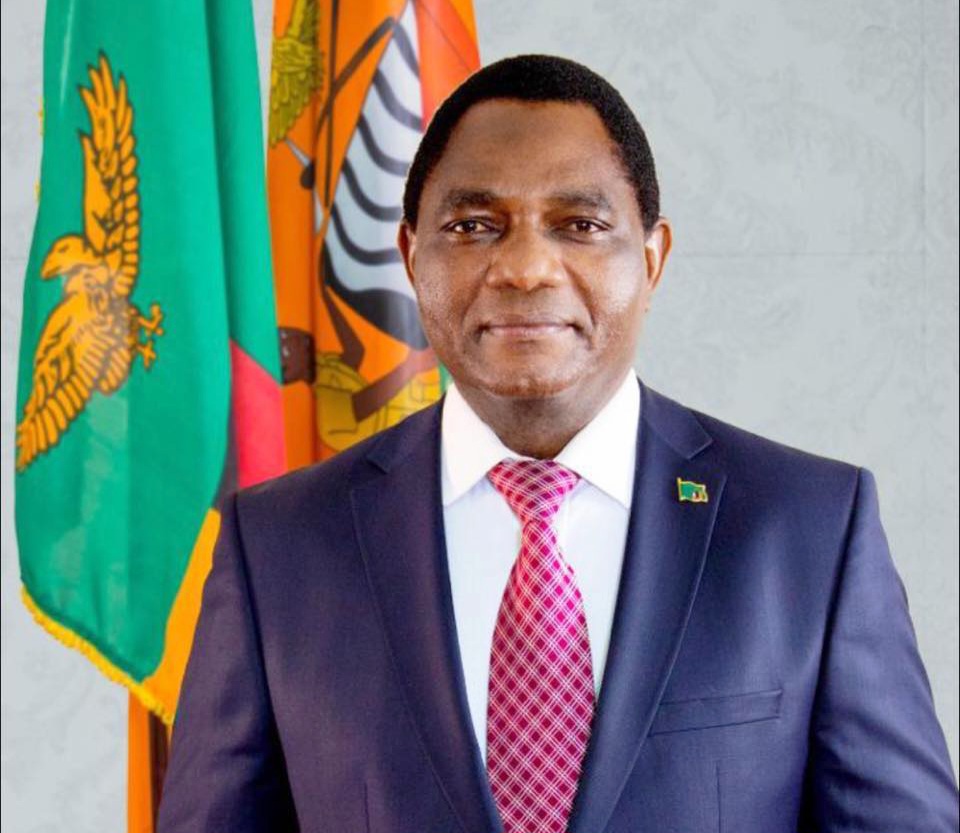
Zambia’s 2026 presidential election is over. Hakainde Hichilema has secured a second term with roughly 60% of the vote, defeating opposition candidate Brian Mundubile, who received about 38%.
But the most interesting story is not simply who won.
It is what Zambia’s political rhetoric before the election — and the international congratulations arriving after it — tell us about the country’s next political and geopolitical chapter.
The election was fought over two very different definitions of progress
Hichilema entered the campaign with a powerful economic argument.
His administration had overseen Zambia’s debt restructuring, improved relations with international lenders and attracted major investment into the mining sector. Copper was central to the government's vision of the next five years, with ambitions to dramatically increase production.
The opposition attacked the other side of that equation.
Mundubile's campaign argued that macroeconomic improvement had not translated sufficiently into everyday prosperity. Cost of living, jobs, electricity and the distribution of Zambia's mineral wealth became central political issues.
That produced the fundamental electoral divide:
Hichilema: economic stabilisation is creating the foundation for growth.
Opposition: stabilisation means little if ordinary Zambians do not feel the improvement.
There was also a second, more politically sensitive argument: whether the electoral playing field itself was sufficiently open.
Opposition forces raised concerns about electoral administration, intimidation and unequal political conditions, while the government rejected accusations of democratic backsliding.
The election was therefore about more than economic performance. It was also a contest over economic legitimacy and democratic legitimacy.
Then came the result
The result gives Hichilema something he did not have after his first victory in 2021: a fresh five-year mandate to turn economic stabilisation into measurable prosperity.
But the election was not without disruption.
Vote counting was temporarily suspended following violence against election officials and the theft of ballot papers. The election also saw heightened political tensions and allegations concerning the treatment of opposition figures.
That makes Hichilema's post-election message particularly important.
He has shifted from campaigning against his opponents to speaking about unity, development and governing for all Zambians.
That transition will be closely watched.
Because winning an election is one challenge.
Governing after a contested campaign is another.
Watch the congratulations
This is where the story becomes geopolitical.
The international response to Hichilema's victory is not simply diplomatic protocol.
Zambia occupies an increasingly important position in the global competition for critical minerals.
Copper is fundamental to the energy transition, electrification, infrastructure and technology supply chains. Zambia is therefore much more strategically important to Washington, Beijing, Gulf investors and international mining companies than its size might suggest.
The external congratulations should therefore be read alongside the interests of the countries sending them.
They are signalling something broader:
Continuity matters.
Investors want policy predictability.
Regional governments want stability.
Major powers want access and influence.
And Zambia wants to convert its mineral wealth into jobs, infrastructure and long-term national development.
That is the equation Hichilema now has to manage.
The second Hichilema term will be judged differently
His first term was largely about stabilisation.
The second must be about distribution.
Can Zambia turn copper investment into employment?
Can economic growth reduce household pressure?
Can electricity supply become reliable?
Can the government maintain fiscal discipline while increasing social investment?
And perhaps most importantly:
Can Zambia extract greater national value from its strategic minerals without becoming trapped between competing external powers?
Those questions matter far beyond Lusaka.
China has deep commercial interests in Zambia.
The United States increasingly sees African critical minerals through the lens of strategic supply chains.
European and Gulf investors are also looking at Africa's mineral economy with renewed interest.
Hichilema therefore enters his second term with something larger than an electoral mandate.
He enters it with geopolitical leverage.
The real test begins now
The opposition's pre-election rhetoric will not disappear simply because the ballots have been counted.
If the opposition was correct that economic gains were not reaching enough Zambians, the pressure will return quickly.
If Hichilema is correct that economic reform has created the foundation for prosperity, his second term should provide the evidence.
That is the real political contract of the 2026 election.
Zambians have given Hichilema another mandate.
Now they will expect the copper boom, debt restructuring and investment story to become something much more tangible:
jobs, electricity, higher incomes and a larger share of Zambia's mineral wealth staying in Zambia.
And internationally, the question is equally clear:
Who benefits from Zambia's next economic chapter — and how much strategic influence will they acquire in return?
That is the story Verifyr will be watching.
By Alain Nzeyimana Founder & CEO | Verifyr
Related intelligence
Kimberly Guilfoyle: When Diplomacy Meets Geopolitical Rivalry
Kimberly Guilfoyle: When Diplomacy Meets Geopolitical Rivalry
13 Oct 2026
Brazil: The Global Power That Refuses to Choose a Side
Brazil: The Global Power That Refuses to Choose a Side
5 Oct 2026
Greenland, Russia, Britain and the Red Sea Signal a New Geopolitical Era
Greenland, Russia, Britain and the Red Sea Signal a New Geopolitical Era
18 Sept 2026
Plans
Free
$0
Instant verdicts, no signup
Pro
$49
Full reports + certificates
Growth
$149
1,000 audits + team access
Newsroom report
$199
One analyst-reviewed certificate
Newsletter
Get verified stories in your inbox
One email when a new audit drops. No spam.