
Analysis
France’s Unrest Deepens: Nearly 1,000 Arrested as Violence Returns to the Streets
By Alain Nzeyimana ·
France’s Unrest Deepens: Nearly 1,000 Arrested as Violence Returns to the Streets
France’s Unrest Deepens: Nearly 1,000 Arrested as Violence Returns to the Streets
Get our raw articles before they are published anywhere else. Join the official Verifyr Telegram Channel t.me/VerifyrOfficiaFrance is facing a growing test of public order as protests over living costs, education funding and public services again descend into clashes in several cities.
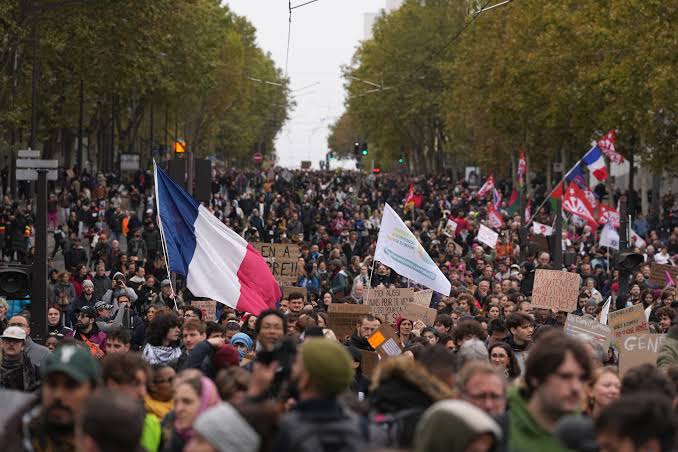
On Saturday, 24 October, Interior Minister Laurent Nuñez reported nearly 1,000 arrests nationwide, with the figure expected to rise. The Interior Ministry estimated that 410,000 people demonstrated across France, while the CGT trade union put turnout at nearly 800,000. Authorities deployed 70,000 police officers and gendarmes.
Paris's main march was largely peaceful before clashes erupted as it dispersed. In Marseille, groups set fires and threw rocks and bottles at police. Violence was also reported in Lyon, Bordeaux and other cities. The government said the security operation helped prevent a repeat of the previous weekend's widespread looting, although confrontations continued.
Beyond the violence
The demonstrations reflect mounting frustration over household costs, inadequate school resources and strained public services. What began with school protests has expanded into a broader movement involving students, workers and trade unions.
But an essential distinction must be maintained: hundreds of thousands of people exercising their right to protest cannot be held responsible for the actions of those who attack police, loot businesses or destroy public property.
The government faces two simultaneous challenges: protecting public safety and responding credibly to the grievances driving the demonstrations. Heavy policing may contain immediate disorder, but it cannot by itself resolve economic insecurity or restore confidence in public institutions.
What France should do now
First, enforce the law consistently. Investigate violence, prosecute offences on the evidence and protect peaceful demonstrators from disproportionate intervention.
Second, address the underlying grievances. Publish a funded timetable for improving school staffing, access to public services and targeted support for households facing high living costs.
Third, rebuild public trust. Establish structured talks with student representatives, unions, employers and local authorities, with publicly reported progress and clear deadlines.
Fourth, improve accountability. Independently review security operations and publish transparent data on arrests, charges, injuries and outcomes.
Conclusion: Order is necessary, but not sufficient
France cannot allow political protest to become a licence for violence. Nor can it expect repeated security deployments to settle grievances that remain unresolved.
The government should adopt a 90-day action plan combining targeted law enforcement with concrete, funded social measures, reporting progress publicly each month.
The objective must be twofold: restore order on the streets and give citizens credible reasons to believe that peaceful protest can lead to meaningful change.
By Alain Nzeyimana Verifyr
Related intelligence
CENTCOM’s A-10 Patrol: Routine Flight or Strategic Signal?
CENTCOM’s A-10 Patrol: Routine Flight or Strategic Signal?
24 Oct 2026
LeBron James Fires Back at Trump: “Must Be a Slow Day in the Office”
LeBron James Fires Back at Trump: “Must Be a Slow Day in the Office”
23 Oct 2026
Mamdani Takes the Trump Clash Beyond Rhetoric With Spanish-Language ICE Rights Guide
Mamdani Takes the Trump Clash Beyond Rhetoric With Spanish-Language ICE Rights Guide
23 Oct 2026
Plans
Free
$0
Instant verdicts, no signup
Pro
$49
Full reports + certificates
Growth
$149
1,000 audits + team access
Newsroom report
$199
One analyst-reviewed certificate
Newsletter
Get verified stories in your inbox
One email when a new audit drops. No spam.