
Geopolitics
Trump in Dublin: A Remark That Reopened Ireland’s Biggest Geopolitical Question
By Alain Nzeyimana ·
Trump in Dublin: A Remark That Reopened Ireland’s Biggest Geopolitical Question
Trump in Dublin: A Remark That Reopened Ireland’s Biggest Geopolitical Question
Get our raw articles before they are published anywhere else. Join the official Verifyr Telegram Channel t.me/VerifyrOfficiaAlain Nzeyimana | Founder & CEO | Verifyr & BuyRent
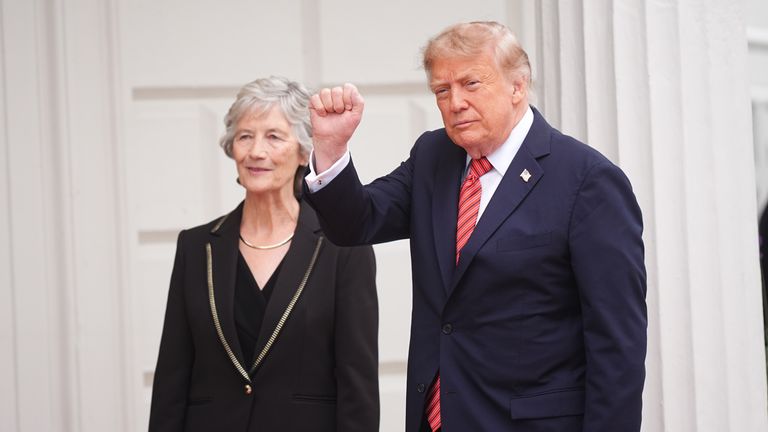
Donald Trump's visit to Ireland was supposed to combine diplomacy, business and golf. Instead, the U.S. president injected one of the British Isles' most sensitive political questions directly into the international spotlight.
During meetings in Dublin with Irish President Catherine Connolly and Taoiseach Micheál Martin, Trump said he would "love" to see Ireland reunified, adding that he believed it would eventually happen and suggesting that it "may as well happen now."
That is not simply another provocative Trump remark.
It matters because Washington has traditionally maintained a careful position of neutrality on the constitutional status of Northern Ireland, particularly since the 1998 Good Friday Agreement.
Trump's intervention therefore touches three interconnected relationships: Washington–London, Washington–Dublin and Dublin–London.
A diplomatic departure
Under the Good Friday Agreement, Northern Ireland's constitutional future ultimately depends on the principle of consent. A border poll can only be called by the British government if it believes there is sufficient evidence that a majority would favour constitutional change.
The current British position has not changed following Trump's comments. Prime Minister Andy Burnham's office reiterated that there is no basis at present for calling such a referendum.
That creates an unusual situation.
The president of the United States is publicly expressing enthusiasm for an outcome that the British government currently considers premature.
For decades, American administrations have generally treated the issue with diplomatic caution. Trump's remarks move Washington's rhetoric closer to the political debate itself.
That does not mean American policy has suddenly changed.
But rhetoric from the White House has geopolitical weight.
Why Ireland matters to Washington
Ireland occupies an unusual position in the American strategic landscape.
It is a small European state with exceptionally deep economic connections to the United States. American technology, pharmaceutical and financial companies have built major operations in Ireland, while the Irish-American relationship gives Dublin political relevance far beyond its size.
Trump himself highlighted the strength of U.S.–Ireland economic ties during the visit, even while criticising aspects of Europe's economic relationship with America.
Ireland is therefore not simply another European capital for Washington.
It is simultaneously an economic partner, a diplomatic interlocutor and a country with a historic relationship with the United States.
The Northern Ireland question is different
The danger is reducing Irish reunification to a slogan.
Northern Ireland's constitutional future involves competing identities, British-Irish relations, the legacy of the Troubles, economic considerations and the political architecture created by the Good Friday Agreement.
Trump's intervention may energise nationalists who want reunification.
It may simultaneously alarm unionists who regard Northern Ireland's place within the United Kingdom as fundamental.
And it puts London in an uncomfortable position: how should Britain respond when its closest global ally publicly expresses enthusiasm for a constitutional outcome that London does not currently support?
That is where the geopolitical significance lies.
Trump changes the conversation
The most important consequence of Trump's comments may not be an immediate policy change.
It may be that he has changed the international conversation around Irish unity.
The question was already becoming increasingly prominent. Trump has now placed it on a much larger geopolitical stage.
His Dublin visit also demonstrated his characteristic ability to combine political diplomacy with personal interests. After his meetings in the capital, Trump travelled to his Doonbeg resort in County Clare, where the Irish Open was taking place.
That combination of statecraft, business and personal branding is increasingly characteristic of Trump's international politics.
The bigger picture
Trump's Dublin intervention should therefore be watched less as a prediction that Irish reunification is imminent and more as another example of the changing diplomatic environment surrounding Europe.
The old assumptions about American foreign policy are becoming less reliable.
Washington is increasingly willing to challenge established diplomatic positions, pressure allies and publicly engage with questions that previous administrations approached cautiously.
Ireland's constitutional future will ultimately be decided through the democratic and legal mechanisms established by the people of Ireland and Northern Ireland.
But Trump's intervention has demonstrated something important:
Irish reunification is no longer only an Irish or British conversation. It is once again a subject of international strategic attention.
And that makes Dublin, London and Washington worth watching very closely.
Related intelligence
The Strait That Could Redraw Asia
The Strait That Could Redraw Asia
1 Sept 2026
Jaylen Brown and the Battle Beyond Basketball
Jaylen Brown and the Battle Beyond Basketball
31 Aug 2026
From Canada to Nepal: The New Geopolitical Map Has No Borders
From Canada to Nepal: The New Geopolitical Map Has No Borders
28 Aug 2026
Plans
Free
$0
Instant verdicts, no signup
Pro
$49
Full reports + certificates
Growth
$149
1,000 audits + team access
Newsroom report
$199
One analyst-reviewed certificate
Newsletter
Get verified stories in your inbox
One email when a new audit drops. No spam.