
Geopolitics
Canada-US Tariff Talks: Will Three Days Change Anything?
By Alain Nzeyimana ·
Canada-US Tariff Talks: Will Three Days Change Anything?
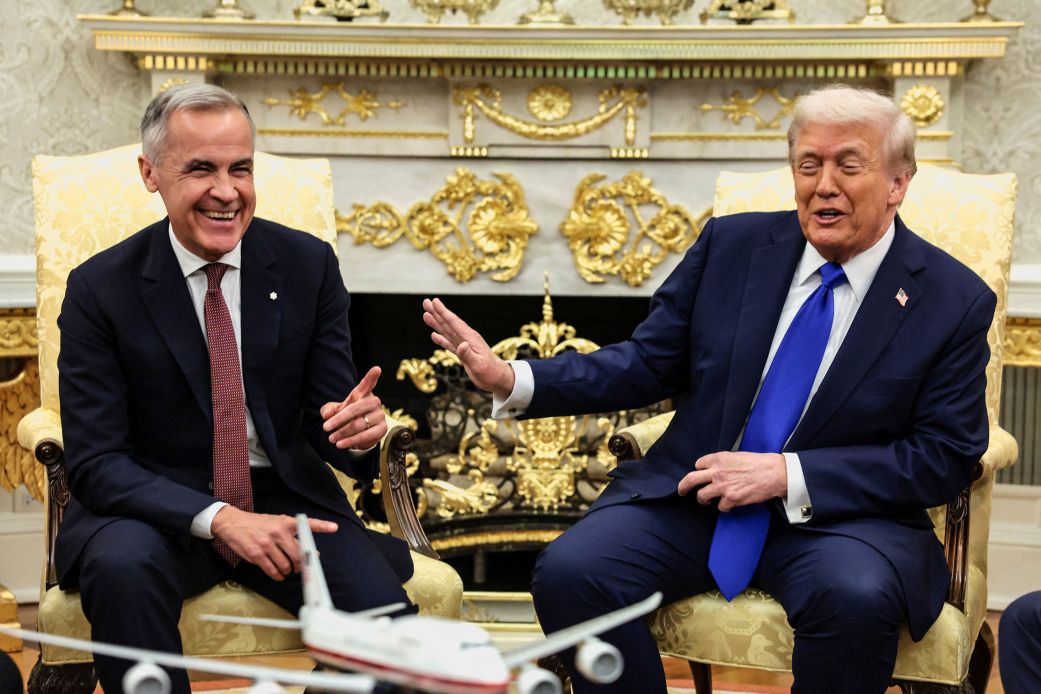
Canada-US Tariff Talks: Will Three Days Change Anything?
Get our raw articles before they are published anywhere else. Join the official Verifyr Telegram Channel t.me/VerifyrOfficiaFor three days, the trade war is on hold.
That is the immediate significance of President Donald Trump’s decision to pause planned 50% tariffs on around $20 billion of Canadian goods just hours before they were due to take effect. Trump said the two countries had reached a deal subject to final documentation. Canadian Prime Minister Mark Carney, however, struck a more cautious note: “substantial progress” had been made, but important work remained.
That difference in language matters.
Washington is selling a breakthrough.
Ottawa is describing unfinished negotiations.
So, will three extra days actually change anything?
The short answer: probably — but not because three days is enough to solve everything
The extension itself does not resolve the core disputes. The negotiations still involve market access, Canada's dairy protections, alcohol restrictions, vehicle tariffs, rules on North American content and digital trade. One particularly important disagreement has concerned how tariff deductions for Canadian and Mexican-built vehicles should be calculated: Washington has pushed for recognition of U.S. content, while Canada has argued for a broader North American calculation.
Three days cannot rewrite the entire economic relationship between two deeply integrated economies.
But three days can change the political calculation.
The most important thing has already happened: the deadline passed without tariffs
Deadlines matter in negotiations because they force governments to reveal their real priorities.
Until the final hours, the threat was simple: agree or face 50% tariffs.
Then Washington paused.
That does not mean Canada won.
But it does mean the Trump administration concluded that imposing the tariffs immediately was less valuable than preserving the negotiations.
That is a significant signal.
Pressure has produced movement — but at what cost?
The tariff threat appears to have accelerated talks that had become slow and opaque. The White House says the emerging arrangement includes broader market access for American goods, economic-security commitments and digital trade alignment. Ottawa has not yet publicly confirmed the full details.
This is where the real political risk now begins for Mark Carney.
Canada may avoid the immediate 50% shock but still emerge with an agreement containing concessions that will be difficult to sell domestically.
For Trump, the opposite political logic applies.
He can claim the tariff threat forced Canada back to the table and extracted movement without actually imposing the new duties.
Three days can become more than three days
The most important possibility is that this suspension creates a new negotiating mechanism.
If officials are genuinely close to finalising documents, three days may be enough to convert a provisional understanding into a formal agreement.
If the underlying disagreements remain unresolved, however, the pause merely postpones the next deadline.
And there is a third possibility:
the deadline could be extended again.
That may be the most likely outcome if both governments conclude that a full trade war is economically and politically more damaging than continued uncertainty.
The broader dispute is not disappearing
Even before this latest threat, Canada was dealing with significant U.S. tariffs in sectors including automobiles, steel, aluminum and forest products. The Bank of Canada estimated the average U.S. tariff rate on Canadian goods at 5% as of July 2026.
That means the current negotiations are not simply about stopping one new 50% measure.
They are about defining what the Canada-US economic relationship will look like under Trump's trade policy.
Carney's government has increasingly emphasised building a stronger and more independent Canadian economy. That is not accidental language.
The paradox is obvious:
Canada wants a deal with its largest trading partner while simultaneously reducing the strategic vulnerability that its dependence on that partner has exposed.
The Verifyr assessment
The three-day suspension is meaningful, but it is not a resolution.
It has achieved three things:
1. Stopped an immediate escalation.
2. Created political space to finalise a partial or broader agreement.
3. Demonstrated that both sides still believe a negotiated outcome is preferable to an immediate rupture.
But the hardest question remains unanswered:
What is Canada giving up, and what is it getting in return?
Until the terms are public, this should be viewed as a negotiating breakthrough, not yet a trade settlement.
The three days will matter if they produce an agreement with durable reductions in the uncertainty already hanging over the Canada-US economic relationship.
If not, Washington and Ottawa will simply have moved the cliff edge three days further down the road.
And for both countries, that may become the real problem:
not tariffs themselves, but an economic relationship increasingly governed by temporary reprieves, political deadlines and perpetual uncertainty.
By Alain Nzeyimana Founder & CEO | Verifyr
Related intelligence
Kimberly Guilfoyle: When Diplomacy Meets Geopolitical Rivalry
Kimberly Guilfoyle: When Diplomacy Meets Geopolitical Rivalry
13 Oct 2026
Brazil: The Global Power That Refuses to Choose a Side
Brazil: The Global Power That Refuses to Choose a Side
5 Oct 2026
Greenland, Russia, Britain and the Red Sea Signal a New Geopolitical Era
Greenland, Russia, Britain and the Red Sea Signal a New Geopolitical Era
18 Sept 2026
Plans
Free
$0
Instant verdicts, no signup
Pro
$49
Full reports + certificates
Growth
$149
1,000 audits + team access
Newsroom report
$199
One analyst-reviewed certificate
Newsletter
Get verified stories in your inbox
One email when a new audit drops. No spam.