
Geopolitics
China–Russia's Arctic Corridor.
By Alain Nzeyimana ·
China–Russia's Arctic Corridor.
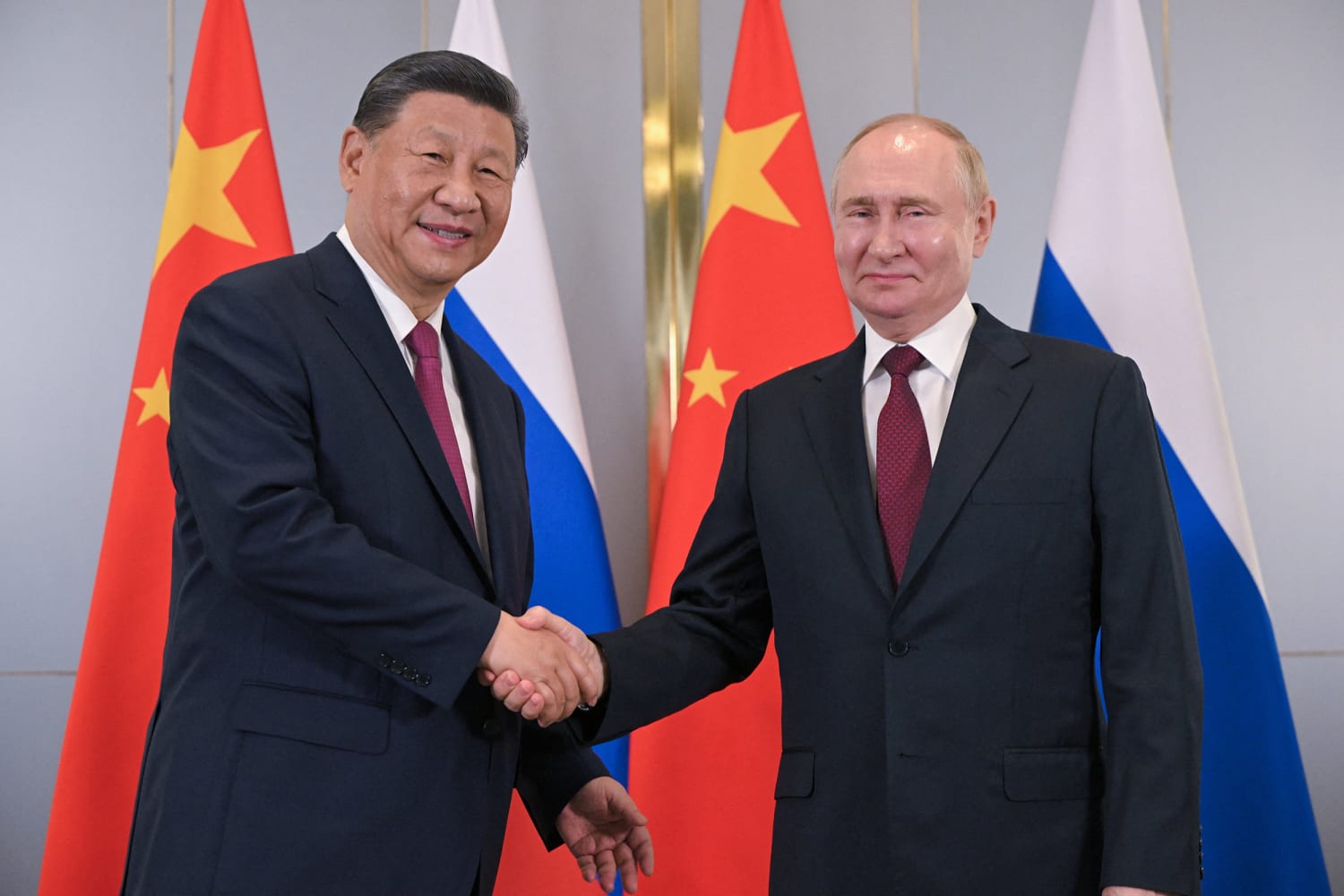
China–Russia's Arctic Corridor.
Get our raw articles before they are published anywhere else. Join the official Verifyr Telegram Channel t.me/VerifyrOfficiaThe most important detail in the latest data on the Northern Sea Route is not that ships are sailing through the Arctic.
It is who is increasingly using the route — and what that says about the emerging geopolitical order.
A CNN analysis of shipping data compiled by Norway-based Centre for High North Logistics highlights a striking reality: since Russia's full-scale invasion of Ukraine, transit activity along the Northern Sea Route has become overwhelmingly tied to the China–Russia relationship.
That is not simply a story about shipping.
It is a story about sanctions, strategic dependency, Arctic power and the gradual construction of an alternative Eurasian trade architecture.
The Northern Sea Route runs along Russia's Arctic coastline, connecting the Atlantic and Pacific through waters that are becoming increasingly navigable as Arctic sea ice retreats. Russia controls the route and has invested heavily in icebreakers and infrastructure to turn it into a strategic commercial corridor.
And China has every reason to be interested.
Russia needs China. China needs options.
Since the invasion of Ukraine, Russia's economic relationship with Europe has been radically disrupted.
Energy exports that once flowed west have increasingly been redirected east. China has become one of Moscow's most important economic partners, buying Russian hydrocarbons and commodities while supplying Russia with manufactured goods, machinery and other imports.
The Arctic adds another layer to that relationship.
CHNL's 2024 data show that 95% of transit cargo moved from Russia to China, overwhelmingly consisting of Russian commodities.
That tells us something uncomfortable for Moscow: the Northern Sea Route may help Russia escape some of the constraints created by Western sanctions, but it can simultaneously deepen its dependence on Beijing.
Russia controls the geography.
China increasingly controls the demand.
That is a very different kind of strategic relationship.
The Arctic is no longer merely about ice
For decades, the Arctic was treated primarily as an environmental, scientific and military frontier.
That is changing.
The region is becoming an arena where energy security, shipping, critical minerals, climate change and great-power competition intersect.
Russia sees the Northern Sea Route as a national strategic asset. China has described itself as a "near-Arctic state" and has steadily expanded its economic and scientific interest in the region.
Beijing does not need to control the Arctic to benefit from it.
It needs access.
And the Northern Sea Route potentially provides China with another maritime option between Asia and Europe — one that does not depend entirely on the traditional Suez Canal route.
But there is an important caveat.
The Northern Sea Route is not yet a substitute for global maritime trade routes. Ice conditions remain a major constraint, the navigation season is limited, and the infrastructure required for reliable year-round commercial shipping remains expensive. CHNL's research has repeatedly highlighted these limitations.
So this is not the Arctic suddenly replacing Suez.
It is something more gradual — and potentially more consequential.
A new Eurasian axis
The geopolitical significance lies in the direction of travel.
Russia is increasingly looking east.
China is increasingly looking north.
Those two movements intersect in the Arctic.
That creates a powerful strategic alignment: Russian territory and resources meet Chinese capital, manufacturing capacity and enormous consumer demand.
The relationship is therefore bigger than a shipping lane.
It is the physical manifestation of a broader China–Russia Eurasian axis emerging in response to a Western-led economic system that both countries increasingly view as hostile or restrictive.
And there is a second-order effect.
The more infrastructure Russia builds around the Northern Sea Route — ports, icebreakers, communications systems, energy terminals and logistics hubs — the more commercially viable the corridor becomes.
The more viable it becomes, the more attractive it becomes to China.
And the more Chinese trade flows through it, the greater Beijing's strategic interest in the stability of Russia's Arctic infrastructure becomes.
That creates a feedback loop.
But Beijing holds the stronger hand
This is where the geopolitics gets particularly interesting.
Russia possesses the geography and military presence.
China possesses the economic scale.
Moscow can provide access to the Arctic corridor, but Beijing has alternatives. Russia, meanwhile, has far fewer alternatives to China's enormous market for its energy and raw materials.
That asymmetry matters.
The Northern Sea Route could therefore strengthen Russia's position against the West while simultaneously making Russia more economically tethered to China.
This is the paradox of Moscow's pivot to Asia:
Russia is gaining strategic room from the West, but much of that room leads straight into China's economic orbit.
Watch the Arctic
The real story is not whether the Northern Sea Route becomes the world's next major shipping highway tomorrow.
It won't.
The real story is what happens if, over the next decade, climate change, Russian infrastructure investment and Chinese demand make the route progressively more commercially viable.
Then the Arctic stops being a peripheral theatre.
It becomes part of the central contest over who controls the arteries of 21st-century Eurasian commerce.
And that is why a red icebreaker sailing through the top of the world is more than an image of Russia and China doing business.
It may be a glimpse of the map being redrawn underneath us.
By Alain Nzeyimana Founder & CEO | Verifyr
Related intelligence
Kimberly Guilfoyle: When Diplomacy Meets Geopolitical Rivalry
Kimberly Guilfoyle: When Diplomacy Meets Geopolitical Rivalry
13 Oct 2026
Brazil: The Global Power That Refuses to Choose a Side
Brazil: The Global Power That Refuses to Choose a Side
5 Oct 2026
Greenland, Russia, Britain and the Red Sea Signal a New Geopolitical Era
Greenland, Russia, Britain and the Red Sea Signal a New Geopolitical Era
18 Sept 2026
Plans
Free
$0
Instant verdicts, no signup
Pro
$49
Full reports + certificates
Growth
$149
1,000 audits + team access
Newsroom report
$199
One analyst-reviewed certificate
Newsletter
Get verified stories in your inbox
One email when a new audit drops. No spam.