
Analysis
☭CPP Crypto Corruption: China’s Digital Financial Crackdown Enters a New Phase
By Alain Nzeyimana ·
☭CPP Crypto Corruption: China’s Digital Financial Crackdown Enters a New Phase
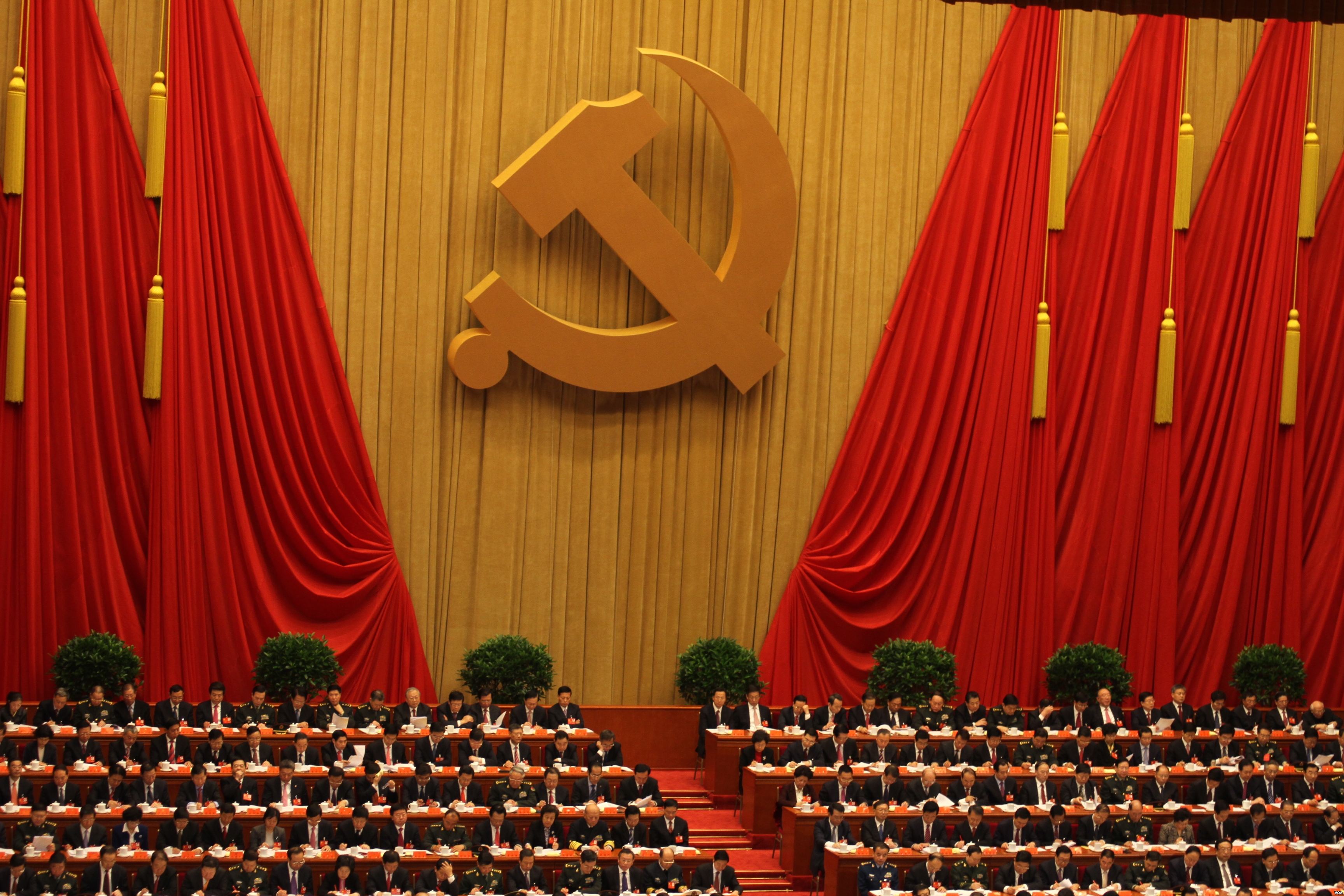
☭ CCP Targets Crypto Corruption: China’s Digital Financial Crackdown Enters a New Phase
By Alain Nzeyimana | November 2, 2026
China’s ruling Communist Party is preparing to extend its anti-corruption campaign deeper into the digital financial system, placing cryptocurrency, blockchain technology and cross-border capital transfers firmly within its expanding enforcement agenda.
A resolution adopted during the Fifth Plenary Session of the 20th Central Committee, held in Beijing from October 26 to 29, calls for a more aggressive campaign against corruption involving virtual currencies, internet-based transactions, blockchain technology and international financial movements.
The document, released through China’s state-run Xinhua news agency on November 1, signals a significant expansion in the political leadership’s approach to financial oversight.
The implications extend beyond cryptocurrency itself.
At the centre of this development is the Chinese Communist Party’s determination to strengthen its control over public officials, financial networks and the increasingly sophisticated mechanisms used to conceal illicit wealth.
A New Front in Xi Jinping’s Anti-Corruption Campaign
Since taking power in 2012, President Xi Jinping has made corruption one of the defining targets of his political leadership.
The campaign has reached across the Chinese political, military and administrative establishment, removing senior officials while reinforcing the Communist Party’s disciplinary structures.
According to figures presented by Chinese anti-corruption officials following the latest plenum, disciplinary and supervisory authorities have filed more than 8.1 million cases and punished approximately 7.9 million individuals since 2012.
The campaign has continued to reach senior political and military figures.
The latest plenum reinforced the party’s commitment to maintaining an aggressive anti-graft strategy, describing corruption as a persistent threat to the organisation’s political integrity.
However, the new resolution introduces a particularly important dimension: the growing intersection between corruption, digital technology and international financial movements.
The party is no longer concentrating exclusively on conventional bribery, misuse of public funds or illicit business arrangements.
It is also targeting the technological infrastructure that may allow corrupt officials to conceal, transfer or protect their assets.
Why Cryptocurrency Is Becoming a Political Concern
Cryptocurrency presents a complicated challenge for authorities attempting to trace illicit financial activity.
Digital assets can move across borders without relying entirely on traditional banking channels. Depending on the cryptocurrency, transaction structure and services involved, investigators may encounter intermediaries, offshore platforms, anonymous wallet arrangements and complex asset transfers.
Blockchain transactions are not automatically anonymous. Many public blockchains provide permanent transaction records that can be analysed by investigators.
However, identifying the individuals behind particular wallets and connecting transactions to real-world financial activity can require extensive investigative work.
This creates opportunities for sophisticated financial arrangements involving intermediaries, concealed ownership and international transfers.
For Beijing, the concern is not simply whether cryptocurrency is being used by ordinary investors.
The political priority is whether digital financial systems can be exploited by officials, businesspeople or their associates to facilitate bribery, conceal illicit wealth or move assets beyond domestic scrutiny.
The new resolution specifically calls for action against corruption involving virtual currencies and blockchain technology.
It places these activities alongside internet-based transactions and cross-border capital movements, suggesting that Chinese investigators will increasingly approach corruption through a broader digital-financial lens.
The Investigation Extends Beyond Cryptocurrency
The resolution is significant because it does not treat cryptocurrency as an isolated problem.
Instead, it places digital assets within a wider network of financial and political oversight.
The party has called for stronger scrutiny of officials whose family assets or spending appear inconsistent with their legitimate income.
Investigators are also expected to pay closer attention to the business activities of officials’ spouses, children and other family members.
This matters because corruption frequently involves indirect arrangements rather than straightforward transfers to the official concerned.
Assets may be held through relatives, business associates, intermediaries or companies whose ownership structures obscure the relationship between financial beneficiaries and public officials.
The party’s expanded oversight agenda seeks to address these vulnerabilities.
The objective is to identify not only the official receiving illicit benefits, but also the wider financial network through which those benefits are obtained, concealed or transferred.
Digital Surveillance and Big-Data Oversight
One of the most consequential elements of the new directive is the proposed expansion of digital supervision.
The Communist Party has called for the development of digital discipline-inspection platforms and big-data supervision systems to strengthen its ability to monitor the exercise of public power.
These systems could improve the identification of suspicious financial patterns, discrepancies in officials’ declared assets and relationships between public officials and private business interests.
The party is also seeking stronger coordination between disciplinary authorities and other government departments.
Such coordination could potentially make it easier to connect financial records, official disclosures, business relationships and cross-border transactions.
The broader direction is clear: China wants its anti-corruption system to become more technologically sophisticated.
The political leadership is attempting to close the gap between traditional disciplinary investigations and the increasingly digital nature of financial misconduct.
The International Dimension: Following Money Beyond China
The resolution also reinforces the party’s determination to pursue corruption involving overseas assets and international financial movements.
Chinese authorities have repeatedly sought the return of fugitives and assets connected to corruption investigations.
The latest directive calls for stronger international cooperation, improved investigations into cross-border corruption and more effective recovery of illicit assets.
This creates an important geopolitical dimension.
Financial transactions involving cryptocurrency and blockchain can cross jurisdictions, potentially connecting domestic corruption investigations with international financial institutions, digital-asset platforms and offshore intermediaries.
Beijing’s ambitions therefore extend beyond domestic enforcement.
The party wants to improve its ability to identify and recover assets that may have been transferred beyond China’s borders.
The effectiveness of these efforts will depend partly on international cooperation, the availability of financial intelligence and the willingness of foreign jurisdictions to assist Chinese investigators.
This Is Not a New Cryptocurrency Ban
An important distinction must be made.
The latest resolution does not announce a new nationwide cryptocurrency trading ban.
China already maintains severe restrictions on cryptocurrency trading and related financial services.
The new directive concerns the use of digital financial systems in corruption, bribery and the concealment or movement of illicit wealth.
It does not specifically introduce new restrictions on Bitcoin, Ethereum or USDT.
Nor does it announce a new implementation deadline or a separate set of penalties for ordinary cryptocurrency users.
The immediate focus is corruption involving officials and financial networks.
Nevertheless, the resolution could strengthen enforcement against individuals and businesses suspected of facilitating illicit financial transfers.
For cryptocurrency markets, the significance lies in the possibility of more intensive investigations into transactions connected to public officials, cross-border capital movements and concealed assets.
The Bigger Intelligence Picture
The development highlights a broader trend in China’s political and economic system.
The Communist Party is increasingly treating digital technology not merely as an economic instrument, but as an area requiring stronger political supervision.
Cryptocurrency, blockchain and cross-border financial networks are now being incorporated into a larger framework of party discipline, financial oversight and anti-corruption enforcement.
The implications could reach beyond individual corruption investigations.
As Beijing strengthens its ability to monitor officials and financial activity, the boundary between anti-corruption enforcement, digital surveillance and political control becomes increasingly important.
For international observers, the central question is whether these new capabilities will primarily improve accountability and financial transparency, or further consolidate the Communist Party’s control over China’s political and economic institutions.
One thing is clear: China’s anti-corruption campaign is entering a more technologically sophisticated phase.
Verifyr Geopolitical Intelligence will continue monitoring how Beijing’s expanding digital oversight affects financial networks, political power and the international movement of capital.
Signature
Alain Nzeyimana Founder & CEO | Verifyr
Related intelligence
France’s Unrest Deepens: Nearly 1,000 Arrested as Violence Returns to the Streets
France’s Unrest Deepens: Nearly 1,000 Arrested as Violence Returns to the Streets
25 Oct 2026
CENTCOM’s A-10 Patrol: Routine Flight or Strategic Signal?
CENTCOM’s A-10 Patrol: Routine Flight or Strategic Signal?
24 Oct 2026
LeBron James Fires Back at Trump: “Must Be a Slow Day in the Office”
LeBron James Fires Back at Trump: “Must Be a Slow Day in the Office”
23 Oct 2026
Plans
Free
$0
Instant verdicts, no signup
Pro
$49
Full reports + certificates
Growth
$149
1,000 audits + team access
Newsroom report
$199
One analyst-reviewed certificate
Newsletter
Get verified stories in your inbox
One email when a new audit drops. No spam.