
Geopolitics
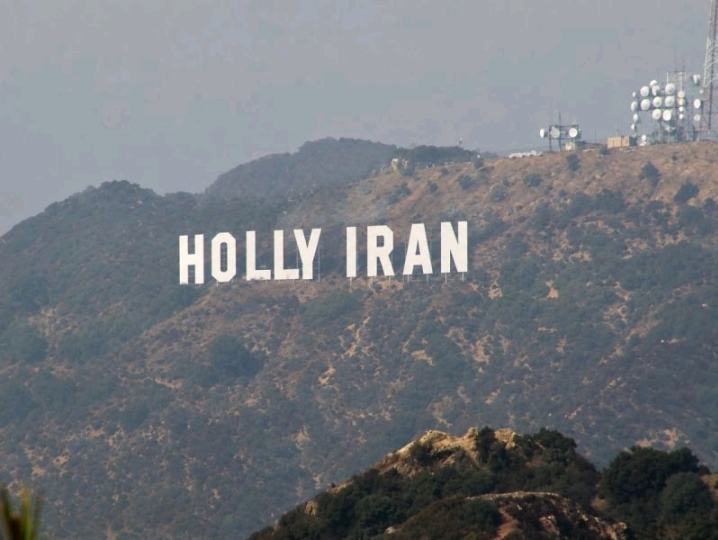
HOLLY IRAN: Tehran’s BRICS Bet Is About More Than Money
By Alain Nzeyimana ·
HOLLY IRAN: Tehran’s BRICS Bet Is About More Than Money
HOLLY IRAN: Tehran’s BRICS Bet Is About More Than Money
Get our raw articles before they are published anywhere else. Join the official Verifyr Telegram Channel t.me/VerifyrOfficiaIran is looking east.
And its growing engagement with BRICS is about considerably more than finding new trading partners.
Iran joined BRICS in 2024. Tehran has since pushed for deeper economic and financial cooperation within the grouping, including its stated intention to join the New Development Bank.
VERIFYR has independently audited the underlying report.
Verdict: VERIFIED NEWS STORY Story veracity: 92/100 Two corroborating sources reviewed.
But verification is only the starting point.
The bigger question is: what does Iran's BRICS strategy tell us about the emerging global order?
Iran is building optionality
Western sanctions have constrained Iran's access to conventional financial channels and complicated its economic relationship with the United States and Europe.
Tehran's response has increasingly been to build alternatives — deeper relationships with China and Russia, participation in BRICS and the Shanghai Cooperation Organisation, and greater emphasis on trade and financial arrangements outside traditional Western structures.
The objective does not necessarily have to be replacing the West.
It can be much simpler:
Create options.
Alternative markets. Alternative financial relationships. Alternative diplomatic partners. Alternative routes for trade.
And ultimately, greater bargaining power.
BRICS is becoming more interesting
BRICS does not need to become an anti-Western alliance to matter.
That is the wrong benchmark.
Its significance may instead lie in creating a wider network of states capable of cooperating without every economic or strategic decision passing through institutions dominated by the United States and its allies.
Iran has obvious reasons to find that attractive.
China and Russia have their own reasons.
India, Brazil and the other members have different interests again.
That diversity makes BRICS nothing like NATO.
But it may also be precisely what makes it difficult to dismiss.
The Washington question
The real issue is not whether BRICS will suddenly replace the dollar.
It won't.
The more consequential question is whether countries increasingly acquire credible alternatives to the Western financial and geopolitical architecture.
That is a subtler form of power shift.
Power does not always move when one system collapses.
Sometimes it moves when another system becomes credible enough to provide an alternative.
Iran is betting on that possibility.
What happens next?
Watch three things:
1. Iran's relationship with the New Development Bank.
2. Whether BRICS develops practical mechanisms for greater intra-bloc trade and financial cooperation.
3. How Washington responds if those mechanisms begin giving sanctioned states greater economic flexibility.
Because the emerging contest may not be BRICS versus the West.
It may be something more consequential:
> Who gets to define the rules of a world where countries increasingly have more than one system to choose from?
Iran is making its choice.
The rest of the world is watching.
---
VERIFYR FORENSIC AUDIT VFR-20260816-ZFJLXG Verified News Story · Story Veracity 92/100 · 2 corroborating sources
VERIFYR establishes the integrity of the underlying claim. The geopolitical interpretation is independent editorial analysis.
By Alain Nzeyimana Founder & CEO | Verifyr
Related intelligence
Kimberly Guilfoyle: When Diplomacy Meets Geopolitical Rivalry
Kimberly Guilfoyle: When Diplomacy Meets Geopolitical Rivalry
13 Oct 2026
Brazil: The Global Power That Refuses to Choose a Side
Brazil: The Global Power That Refuses to Choose a Side
5 Oct 2026
Greenland, Russia, Britain and the Red Sea Signal a New Geopolitical Era
Greenland, Russia, Britain and the Red Sea Signal a New Geopolitical Era
18 Sept 2026
Plans
Free
$0
Instant verdicts, no signup
Pro
$49
Full reports + certificates
Growth
$149
1,000 audits + team access
Newsroom report
$199
One analyst-reviewed certificate
Newsletter
Get verified stories in your inbox
One email when a new audit drops. No spam.