
Geopolitics
Israel and Türkiye Are Not at War. But Syria Is Becoming Their Most Dangerous Front Line
By Alain Nzeyimana ·
Israel and Türkiye Are Not at War. But Syria Is Becoming Their Most Dangerous Front Line
Israel and Türkiye Are Not at War.
Get our raw articles before they are published anywhere else. Join the official Verifyr Telegram Channel t.me/VerifyrOfficiaBut Syria Is Becoming Their Most Dangerous Front Line
For years, the hostility between Türkiye and Israel has been political, ideological and increasingly personal.
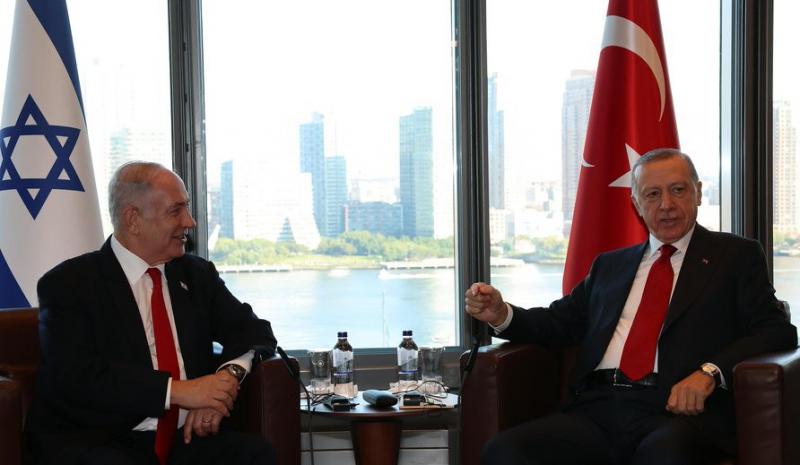
Recep Tayyip Erdoğan and Benjamin Netanyahu have stood on opposite sides of the Gaza war. Ankara has become one of the loudest regional critics of Israel, while Israeli officials increasingly view Türkiye as a geopolitical challenger with ambitions stretching across the Middle East.
Now the rivalry is moving from speeches to geography.
On 18 August, Israel struck Syria's Abu al-Duhur airbase in northwest Syria, near the Turkish border. The attack was not simply another Israeli strike on Syrian territory. It carried a far more direct message: Israel was warning Türkiye against establishing a military position inside post-Assad Syria.
That is what makes this moment significant.
The airbase at the centre of the confrontation
Israel says its strike was driven by concerns that Syria was preparing to permit a Turkish military deployment at Abu al-Duhur.
Türkiye rejects that account. Ankara has called Israel's allegations “untenable”, while Syrian officials say the base was being rehabilitated for the Syrian Air Force and deny that a Turkish military presence was planned there. Syria has acknowledged military cooperation with Türkiye, including Turkish officers and training, but insists this does not amount to a Turkish takeover of the airbase.
The precise details of what Türkiye intended to do at Abu al-Duhur remain contested.
But strategically, the dispute is larger than one runway.
Israel and Türkiye are competing to shape the military future of Syria.
The new Syria question
Türkiye has emerged as one of the most important external partners of Syria's new government under President Ahmed al-Sharaa. Military cooperation, training and reconstruction are all part of Ankara's expanding role.
For Türkiye, influence in Syria is not optional.
Syria sits directly on its southern border. Ankara wants stability, wants to prevent hostile armed groups from establishing themselves there and wants influence over the reconstruction of the Syrian state.
Israel sees the same developments through a different lens.
A stronger Syria backed by Turkish military expertise could eventually mean something Israel has not faced on its northern strategic perimeter: a Turkish-aligned security architecture inside Syria.
That does not mean Türkiye and Israel are preparing for a conventional war.
But it does mean their strategic interests are increasingly colliding in the same physical space.
This was a warning strike
The timing of the Abu al-Duhur attack makes the message even clearer.
According to Syrian officials, a Turkish military delegation had visited the base before the Israeli strikes. Israel then attacked the facility, damaging infrastructure but reportedly causing no casualties.
Whether or not Türkiye was about to establish a permanent presence there, Israel clearly wanted to demonstrate one thing:
There is a limit to the Turkish military footprint it is prepared to tolerate in Syria.
That is why this episode matters beyond the immediate diplomatic dispute.
Israel was not striking Hamas.
It was not targeting Hezbollah.
It was not responding to Iranian weapons transfers.
This time, the strategic target was a possible shift in the regional balance of power.
And that shift has a name: Türkiye.
The danger is not intentional war
Neither Ankara nor Tel Aviv appears to want a direct war.
The danger is something more familiar in modern geopolitics: escalation by proximity.
Turkish personnel, Israeli aircraft, Syrian forces and American interests are increasingly operating inside overlapping military environments. In such conditions, the greatest risk is often not a deliberate decision to start a war.
It is a miscalculation.
An Israeli strike could come closer than expected to Turkish personnel.
A Turkish air-defence system could react.
A military convoy could be misidentified.
A warning could be interpreted as an attack.
And suddenly, two regional powers could be forced to respond to an incident neither intended to create.
The seriousness of that risk is reflected in Washington's reaction. The United States is now working on a deconfliction mechanism involving Türkiye, Israel and Syria, while U.S. envoy Tom Barrack criticised the strike as an “unnecessary escalation”.
That should tell us something important.
The United States is no longer merely managing a disagreement. It is trying to prevent a military misunderstanding between two strategically important partners.
Gaza did not create this rivalry. Syria is exposing it.
The Gaza war intensified the political hostility between Erdoğan and Netanyahu. But the rivalry goes much deeper.
Türkiye sees itself as a major regional power with historical, military and economic reach across the Middle East.
Israel sees itself as a regional security power determined to prevent hostile military architectures from emerging near its borders.
Those ambitions can coexist only up to a point.
Syria may be where that point is being tested.
The fall of the old Syrian order has created a geopolitical vacuum. Türkiye sees an opportunity to build influence. Israel sees a potential threat in allowing any powerful regional competitor to shape the security structure of Syria without constraints.
The struggle is therefore not really about Abu al-Duhur.
The airbase is simply where the larger rivalry became visible.
What happens next?
The immediate risk is likely to be contained through diplomacy and military deconfliction.
But the underlying rivalry is not going away.
Three developments should now be watched closely:
First: Türkiye's military relationship with Syria. Any new agreement involving bases, air defence, drones, training or permanent deployments will be watched carefully by Israel.
Second: Israel's freedom of military action in Syria. Israel has shown repeatedly that it is prepared to strike when it believes a strategic threat is emerging. The question is whether Türkiye's expanding role will become part of that calculation.
Third: the U.S. deconfliction effort. A successful mechanism could prevent accidents. But deconfliction is not the same as resolving the geopolitical dispute.
It simply creates rules for living with it.
The bigger picture
Türkiye and Israel are not at war.
But Syria is increasingly becoming the place where their visions of regional power collide.
One side wants influence over the rebuilding of a neighbouring state.
The other does not want that rebuilding to produce a military balance that threatens its own strategic position.
That is a classic geopolitical collision.
And it is why the most important story is not whether Abu al-Duhur was attacked.
It is why that airbase suddenly mattered so much to both sides.
The answer is simple.
The Middle East's next great strategic rivalry may no longer be unfolding through speeches in Ankara and Jerusalem. It may be unfolding on the ground in Syria.
And that is a much more dangerous development.
By Alain Nzeyimana Founder & CEO | Verifyr
Related intelligence
Kimberly Guilfoyle: When Diplomacy Meets Geopolitical Rivalry
Kimberly Guilfoyle: When Diplomacy Meets Geopolitical Rivalry
13 Oct 2026
Brazil: The Global Power That Refuses to Choose a Side
Brazil: The Global Power That Refuses to Choose a Side
5 Oct 2026
Greenland, Russia, Britain and the Red Sea Signal a New Geopolitical Era
Greenland, Russia, Britain and the Red Sea Signal a New Geopolitical Era
18 Sept 2026
Plans
Free
$0
Instant verdicts, no signup
Pro
$49
Full reports + certificates
Growth
$149
1,000 audits + team access
Newsroom report
$199
One analyst-reviewed certificate
Newsletter
Get verified stories in your inbox
One email when a new audit drops. No spam.