
Analysis
Natalie Harp and the Power of Proximity
By Alain Nzeyimana ·
Natalie Harp and the Power of Proximity
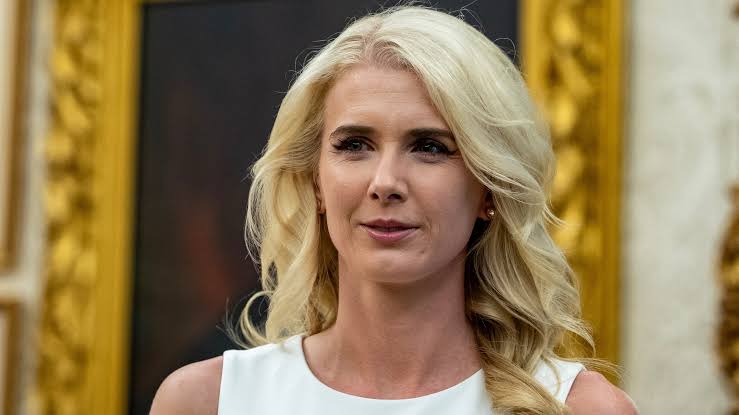
Natalie Harp and the Power of Proximity: When an Assistant Becomes a Gatekeeper to the Presidency
Get our raw articles before they are published anywhere else. Join the official Verifyr Telegram Channel t.me/VerifyrOfficiaThe question is not Natalie Harp’s devotion. It is the power that comes with her access.
The renewed attention around Natalie Harp has focused heavily on her personal devotion to President Donald Trump. Reports about letters, constant proximity and her extraordinary loyalty have generated the headlines.
But that risks missing the more consequential story.
The real question is not what Natalie Harp feels about Donald Trump.
The real question is what Natalie Harp does — and what happens to democratic institutions when the person closest to a president is also a powerful gatekeeper.
Harp officially serves as Special Assistant to the President and Executive Assistant to the President. Yet recent reporting describes a role that extends far beyond the conventional image of an executive assistant. She is a near-constant presence around Trump, is involved in his communications and social-media operation, and has become one of the people with extraordinary access to him.
In a traditional organization, an assistant manages a leader’s schedule.
In a personalized political system, the person who controls access can influence something much more important: the leader’s information environment.
The gatekeeper problem
Power is not always exercised through a Cabinet position, a formal title or a policy portfolio.
Sometimes power comes from deciding:
- Who gets access to the leader. - What information reaches the leader. - What information does not. - Which voices are repeated. - Which online material is placed directly before the president. - Which messages are transmitted in the leader’s name.
Recent reporting has portrayed Harp as unusually important in this information ecosystem, including her role in preparing and managing material around Trump and his public communications. Her closeness has led to the description of her as a gatekeeper — a function that can carry significant influence even when the formal job title appears administrative.
That distinction matters.
An assistant does not need to make the final decision to shape a decision.
Controlling the flow of information before the decision is made can itself become a form of power.
Loyalty versus institutional accountability
There is nothing inherently improper about a president having trusted aides.
Every president has them.
The problem emerges when personal loyalty becomes more important than institutional process.
A White House is supposed to operate through competing systems of advice: policy officials, national-security professionals, Cabinet departments, intelligence assessments, legal counsel and senior political advisers.
Those systems are imperfect. They can be slow. They can be bureaucratic.
But bureaucracy also serves a purpose: it creates records, competing viewpoints and accountability.
A highly personalized gatekeeper can bypass those safeguards.
If an individual has exceptional personal access to a president, reports only directly to that president and becomes central to the information surrounding him, the normal hierarchy may become less important than proximity itself.
That is where Natalie Harp’s role becomes a serious political story.
Not because she is an executive assistant.
But because an executive assistant may possess a degree of informal power that exceeds the transparency surrounding the position.
The presidency as an information ecosystem
Donald Trump has always operated differently from conventional presidents.
His politics are highly personalized. His communication is immediate. His social-media activity can influence financial markets, foreign governments, allies, opponents and policy debates within minutes.
That means the people around his communications are not simply managing publicity.
They can become part of the governing mechanism itself.
Reporting has repeatedly connected Harp to Trump’s social-media operation and the curation of information presented to him. That makes her position more consequential than an ordinary staff role.
In this environment, the person who selects a flattering post, an inflammatory clip, a political attack or a piece of unverified information may not be merely assisting the president.
They may be helping shape the president’s perception of reality.
And when the president of the United States acts on that perception, the consequences extend far beyond the West Wing.
The Natalie Harp story is therefore an institutional story
The debate should not descend into personal insinuation.
Nor should it depend on whether people approve of Harp’s loyalty to Trump.
The more important question is institutional:
How much informal power can a presidential aide exercise before the public has a legitimate right to know more about how that power operates?
The Natalie Harp case exposes a broader weakness in modern personalized government.
Formal job descriptions often fail to capture informal influence.
A president may have hundreds of employees, but only a handful can enter the room, travel with the president, place information directly in front of him and communicate through his public voice.
Those people become politically important whether their titles reflect that power or not.
A better model: transparency around informal power
The solution is not to prohibit presidents from having trusted assistants.
That would be unrealistic.
The solution is to create clearer safeguards around the influence that accompanies extraordinary access.
The White House and future administrations should consider several principles.
1. Define access-based responsibilities more clearly
Senior staff with exceptional and recurring access to the president should have clearly defined responsibilities.
The public should be able to understand whether an individual is performing administrative, communications, political, policy or gatekeeping functions.
2. Protect the integrity of the presidential information flow
No single informal gatekeeper should become the dominant channel through which a president receives information.
Presidents should receive competing assessments from institutional sources, particularly on national security, foreign policy and matters with significant public consequences.
3. Strengthen records around communications
When presidential social-media communications influence policy or public affairs, there should be clearer accountability regarding how those messages are drafted, reviewed and transmitted.
The president may make the final decision.
But modern governance should not rely on mystery surrounding the machinery that delivers the message.
4. Separate personal loyalty from public responsibility
Personal trust is inevitable in politics.
But trust should not replace accountability.
The closer an aide becomes to the center of power, the greater the need for institutional clarity around their role.
5. Recognize informal power as real power
Washington has traditionally focused on official titles.
But modern politics requires greater attention to the people who exercise influence without formal policymaking authority.
The person who controls the room may be more important than the person whose name appears on the organizational chart.
Conclusion: the assistant is not the issue. The system is.
Natalie Harp may eventually leave the spotlight. Another aide may take her place.
That is why the story should not ultimately be about her personality, her loyalty or the latest letter.
The larger question is what her position reveals about modern presidential power.
When proximity to a president becomes the source of extraordinary influence, democratic institutions need mechanisms capable of identifying, understanding and checking that influence.
A healthy presidency should not depend on who is personally closest to the president on a particular day.
It should depend on transparent systems, competing advice, documented responsibilities and institutional accountability.
Natalie Harp is therefore more than a White House curiosity.
She is a case study in a growing reality of modern politics:
In the age of personalized leadership, access is power — and power that is informal should not be invisible.
By Alain Nzeyimana Founder & CEO | Verifyr
Related intelligence
Ethiopia: A Conflict That Could Reopen the Horn of Africa
Ethiopia: A Conflict That Could Reopen the Horn of Africa
5 Oct 2026
America’s Jobs Market Is Losing Momentum — What Happens Next?
America’s Jobs Market Is Losing Momentum — What Happens Next?
5 Oct 2026
M23 Has Reached the Ground. So Has the Great Lakes Power Struggle.
M23 Has Reached the Ground. So Has the Great Lakes Power Struggle.
24 Aug 2026
Plans
Free
$0
Instant verdicts, no signup
Pro
$49
Full reports + certificates
Growth
$149
1,000 audits + team access
Newsroom report
$199
One analyst-reviewed certificate
Newsletter
Get verified stories in your inbox
One email when a new audit drops. No spam.