
Geopolitics
Russia–Japan: When a Diplomatic Summons Becomes a Strategic Signal
By Alain Nzeyimana ·
Russia–Japan: When a Diplomatic Summons Becomes a Strategic Signal
The Diplomatic “No”: What Japan’s Delay Tells Us About Russia’s Changing Leverage
Get our raw articles before they are published anywhere else. Join the official Verifyr Telegram Channel t.me/VerifyrOfficiaFor decades, the choreography of diplomacy has been remarkably predictable.
A foreign ministry summons an ambassador.
The ambassador appears.
A protest is delivered.
The ambassador leaves.
But in the latest Russia–Japan confrontation, Moscow's diplomatic script briefly encountered something unusual:
Tokyo did not immediately play along.
Russian Foreign Minister Sergei Lavrov said Japan had crossed a “line of decency” after Prime Minister Sanae Takaichi condemned Vladimir Putin's visit to Iturup, one of the disputed Kuril Islands. Moscow then summoned Japanese Ambassador Akira Muto. According to Lavrov, however, the Japanese embassy initially said Muto could not attend on the requested dates.
For Moscow, that was evidently irritating enough to make public.
But there is a crucial correction to the viral narrative:
Japan did not permanently refuse the summons.
Muto subsequently arrived at the Russian Foreign Ministry on August 18, where Russia delivered its formal protest.
So why does the episode matter?
Because the delay itself was diplomatic signalling.
The Kurils are not just islands
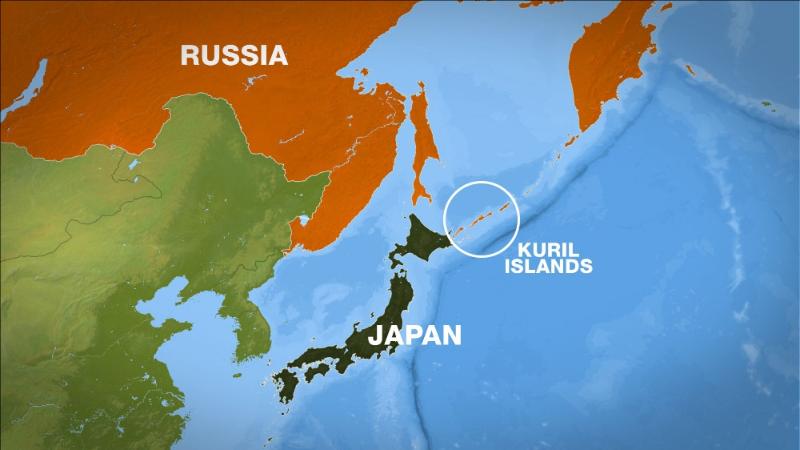
The confrontation began with Putin's visit to Iturup on August 13 — his first visit to any of the four disputed islands claimed by Japan and administered by Russia.
For Tokyo, the symbolism was extraordinary.
Japan calls the islands the Northern Territories and considers them inherent Japanese territory. Russia calls them the Southern Kurils and insists its sovereignty is settled. The dispute has prevented the two countries from signing a formal peace treaty since the Second World War.
Putin's visit therefore wasn't simply a presidential trip.
It was a sovereignty statement.
He was physically present on territory Japan claims.
And the timing matters.
The visit came shortly before Japan's August 15 commemoration of the end of the Second World War — adding another layer of historical symbolism to an already sensitive dispute.
Tokyo responded forcefully.
Moscow responded to Tokyo.
And suddenly the old territorial dispute was back at the centre of Northeast Asian diplomacy.
Japan is not the Japan of 2010
This is where the episode becomes strategically significant.
Japan's security environment has changed dramatically.
China's military rise, North Korea's nuclear programme, Russia's increasingly close relationship with Beijing and the wider deterioration of the post-2022 European security environment have pushed Tokyo toward a more assertive strategic posture.
Japan has also imposed sanctions on Russia following the invasion of Ukraine and increasingly coordinates its security policy with the United States and other partners.
Moscow therefore faces a Japan that is less willing to compartmentalise the territorial dispute from the wider confrontation between Russia and the West.
The old formula — economic engagement, territorial negotiations and strategic ambiguity — has become much harder to sustain.
Moscow is sending a message too
It would be a mistake to interpret this purely as Russian weakness.
Putin's visit was itself a demonstration of confidence.
Russia controls the islands.
It has no intention of conceding sovereignty.
And the Kremlin knows that the geography of the Kurils gives the islands importance far beyond their symbolic value.
The chain provides Russia with access between the Sea of Okhotsk and the Pacific and has significant military and economic value. The dispute therefore intersects with Russia's wider Pacific strategy.
Russia is also increasingly coordinating with China in the region.
That changes Tokyo's calculation.
The Kurils are no longer merely a bilateral historical dispute.
They sit inside a much larger contest over the military geography of the Western Pacific.
And then came the diplomatic delay
This is perhaps the most interesting part.
An ambassador declining—or initially being unavailable for—a summons is not automatically a major diplomatic confrontation.
States do this.
But when the foreign minister publicly complains about it, the episode acquires another meaning.
Lavrov effectively turned a scheduling issue into a political signal.
Tokyo then allowed the issue to remain unresolved temporarily before Muto eventually appeared.
That creates an interesting diplomatic dynamic:
Moscow demanded the ritual. Tokyo delayed the ritual. Moscow complained publicly. Tokyo eventually complied without surrendering its underlying position.
That is not a diplomatic rupture.
It is controlled friction.
And controlled friction is increasingly becoming the language of Russia–Japan relations.
The bigger geopolitical picture
The real danger is not that Japan and Russia suddenly go to war over the Kurils.
That is unlikely.
The greater concern is the gradual militarisation of a dispute that has historically been managed through diplomacy.
Russia is strengthening its position in the Far East.
Japan is strengthening its security posture.
China is becoming more powerful.
North Korea remains nuclear-armed.
And the United States remains the central security partner for Tokyo.
The strategic environment around Japan is therefore becoming considerably more crowded.
Every Russian military movement around the Kurils, every Japanese defence-policy adjustment and every Chinese-Russian exercise now carries a meaning beyond the immediate event.
That is how regional security dilemmas develop.
Not necessarily through one dramatic decision.
Through accumulation.
What happens next?
The immediate diplomatic confrontation is unlikely to disappear.
Russia has warned that it reserves the right to take “adequate countermeasures” against Japan over its position on the islands and sanctions.
Japan, meanwhile, shows no sign of abandoning its territorial claim.
The more important question is whether Tokyo becomes increasingly willing to connect the Kuril dispute to its broader security strategy.
If that happens, the issue could become another component of the emerging Russia–China–North Korea versus U.S.-aligned Northeast Asian security equation.
That would make the Kurils considerably more important than their size suggests.
Because in geopolitics, territory is rarely just territory.
Sometimes it is a signal of where a power believes its red lines begin.
And this week, Moscow and Tokyo have been reminding each other exactly where those lines are.
By Alain Nzeyimana Founder & CEO | Verifyr
Related intelligence
Kimberly Guilfoyle: When Diplomacy Meets Geopolitical Rivalry
Kimberly Guilfoyle: When Diplomacy Meets Geopolitical Rivalry
13 Oct 2026
Brazil: The Global Power That Refuses to Choose a Side
Brazil: The Global Power That Refuses to Choose a Side
5 Oct 2026
Greenland, Russia, Britain and the Red Sea Signal a New Geopolitical Era
Greenland, Russia, Britain and the Red Sea Signal a New Geopolitical Era
18 Sept 2026
Plans
Free
$0
Instant verdicts, no signup
Pro
$49
Full reports + certificates
Growth
$149
1,000 audits + team access
Newsroom report
$199
One analyst-reviewed certificate
Newsletter
Get verified stories in your inbox
One email when a new audit drops. No spam.