
Analysis
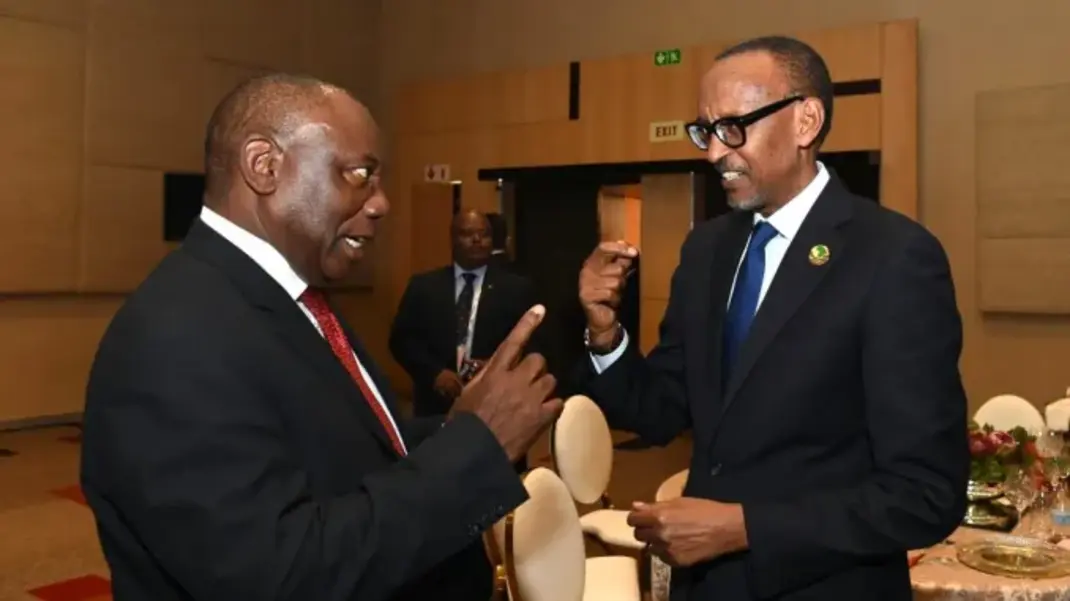
🇷🇼🇿🇦 Rwanda and South Africa Face a New Trade Reality. Washington’s AGOA Blow.
By Alain Nzeyimana ·
🇷🇼🇿🇦 Rwanda and South Africa Face a New Trade Reality. Washington’s AGOA Blow.
🇷🇼🇿🇦 Rwanda and South Africa Face a New Trade Reality. Washington’s AGOA Blow.
By Alain Nzeyimana | November 3, 2026
The Trump administration’s decision to remove Rwanda and South Africa from the African Growth and Opportunity Act (AGOA) marks a significant escalation in Washington’s trade and diplomatic pressure on Africa.
From January 1, 2027, both countries are set to lose preferential, duty-free access to the American market under the programme. Washington cites trade barriers, human rights concerns and threats to US national security and foreign policy interests.
But the geopolitical implications extend far beyond tariffs.
Two countries, two different confrontations
🇿🇦 South Africa has become a major point of friction with Washington over its domestic policies, relations with Russia and China, and its legal action against Israel at the International Court of Justice. Pretoria views the decision as politically driven and argues that Washington has introduced new demands into ongoing trade negotiations.
🇷🇼 Rwanda’s exclusion comes amid mounting tensions over eastern Democratic Republic of Congo. Washington recently sanctioned Rwanda’s Defence Ministry over alleged support for M23 rebels—a charge Kigali disputes. Rwanda also faces American concerns over governance, human rights and trade policy.
Africa’s strategic dilemma
AGOA was designed to strengthen American-African economic relations while encouraging economic reform. Its removal from two influential African economies raises uncomfortable questions about whether trade preferences are becoming increasingly conditional on geopolitical alignment.
The immediate economic damage may be manageable, particularly for South Africa, where AGOA represents a relatively small share of overall exports. But the political signal is considerably larger.
Washington is making clear that access to its market is not guaranteed—even for established African partners.
Could this accelerate Africa’s search for alternative markets, particularly China and other emerging economic powers?
The AGOA decision may ultimately prove less about trade than about who gets to shape Africa’s geopolitical future.
Signature
Alain Nzeyimana Founder & CEO | Verifyr
Related intelligence
🇺🇸🇺🇸 Democrats on the Rise: Could 2026 Deliver a Political Earthquake?
🇺🇸🇺🇸 Democrats on the Rise: Could 2026 Deliver a Political Earthquake?
3 Nov 2026
🇺🇸 US Elections: Trump, the Battle for Democracy and the Crisis of American Political Trust
🇺🇸 US Elections: Trump, the Battle for Democracy and the Crisis of American Political Trust
3 Nov 2026
☭CPP Crypto Corruption: China’s Digital Financial Crackdown Enters a New Phase
☭CPP Crypto Corruption: China’s Digital Financial Crackdown Enters a New Phase
2 Nov 2026
Plans
Free
$0
Instant verdicts, no signup
Pro
$49
Full reports + certificates
Growth
$149
1,000 audits + team access
Newsroom report
$199
One analyst-reviewed certificate
Newsletter
Get verified stories in your inbox
One email when a new audit drops. No spam.