
Analysis
🇺🇸 US Elections: Trump, the Battle for Democracy and the Crisis of American Political Trust
By Alain Nzeyimana ·
🇺🇸 US Elections: Trump, the Battle for Democracy and the Crisis of American Political Trust
🇺🇸 US Elections: Trump, the Battle for Democracy and the Crisis of American Political Trust
By Alain Nzeyimana | November 3, 2026
Verifyr Geopolitical Intelligence
America’s elections have become more than a contest between political parties. They are increasingly a struggle over institutional power, national identity, the legitimacy of democratic government and the future of the United States as the world’s leading political and economic power.
At the centre of this transformation stands Donald Trump, whose political movement has fundamentally reshaped the Republican Party and challenged longstanding assumptions about American democracy.
From the disputed aftermath of the 2020 presidential election to the political violence of January 6, 2021, and the increasingly contentious electoral environment surrounding the 2026 midterms, the United States is confronting questions that extend far beyond individual candidates.
Who controls the electoral process? Can political institutions remain independent under intense partisan pressure? And what happens when millions of citizens lose confidence in the legitimacy of elections?
These questions are no longer exclusively American. They carry consequences for democratic movements, international alliances and geopolitical stability worldwide.
The Trump phenomenon: A political revolution
Donald Trump’s rise represents one of the most consequential transformations in modern American politics.
His political appeal rests on a combination of economic frustration, immigration concerns, cultural polarization, distrust of established institutions and dissatisfaction with the traditional political establishment.
For many supporters, Trump represents an alternative to a political system they believe has failed to protect American workers, communities and national interests.
His promises to restore American industrial strength, secure the southern border, challenge global economic arrangements and confront what he describes as the Washington establishment have resonated with millions of voters.
But his political approach has also generated unprecedented controversy.
Trump’s rhetoric frequently challenges political opponents, journalists, prosecutors and government institutions. Critics argue that his attacks on independent institutions weaken democratic accountability and encourage political intimidation.
Supporters counter that he is confronting entrenched bureaucratic interests, political double standards and institutions that they believe have become increasingly partisan.
This conflict has transformed American politics into a struggle over the very definition of democratic representation.
2020: The election that changed America
The 2020 presidential election remains the defining controversy of the Trump era.
Joe Biden defeated Trump during an election conducted amid the COVID-19 pandemic, with expanded access to mail-in voting and unusually high political mobilization.
Trump refused to accept the outcome.
He and his allies alleged widespread election fraud, challenged results in multiple states and attempted to overturn the outcome through legal and political pressure.
The allegations triggered an extensive series of investigations and court proceedings.
Numerous courts rejected attempts to overturn the results, while election officials across the country found no evidence of fraud sufficient to change the outcome.
Even Trump’s former attorney general, William Barr, publicly stated that the Justice Department had not found evidence of fraud on a scale that could have changed the election result.
The distinction is essential: individual irregularities can occur in any large electoral system, but their existence does not establish widespread fraud or demonstrate that an election was stolen.
Nevertheless, the political consequences of the 2020 election extended far beyond the courtroom.
Trump’s refusal to concede helped create a political environment in which millions of Americans questioned the legitimacy of the electoral process.
The controversy also demonstrated how democratic institutions can face extraordinary pressure when political leaders refuse to accept established electoral outcomes.
January 6: The attack on the Capitol
On January 6, 2021, a mob of Trump supporters stormed the United States Capitol while Congress was meeting to certify Biden’s electoral victory.
The attack disrupted the certification process, endangered lawmakers and law enforcement officers, and exposed vulnerabilities in the peaceful transfer of presidential power.
The event became one of the most consequential political crises in modern American history.
Its significance was not simply the physical violence.
The attack represented a direct challenge to the constitutional process through which American presidents assume office.
Trump’s role in the events surrounding January 6 became the subject of congressional investigations, criminal proceedings and intense political debate.
His critics accused him of encouraging an assault on democratic institutions. His supporters argued that investigations were politically motivated and disputed aspects of the government's interpretation of the events.
The broader lesson remains significant: democratic systems depend not only on election laws but also on the willingness of political leaders and their supporters to respect electoral outcomes.
The legal battles surrounding Trump
Trump’s political career has been accompanied by an extraordinary number of legal controversies.
His investigations and prosecutions have involved allegations concerning business practices, classified documents, attempts to interfere with the 2020 election and other matters.
These cases generated intense debate over the independence of the American justice system.
Trump has repeatedly described investigations against him as politically motivated, portraying himself as the target of a coordinated effort to prevent his political return.
His opponents argue that no political leader should be above the law and that criminal allegations must be investigated independently of electoral considerations.
The situation raises a difficult democratic question: how should a political system handle criminal investigations involving a leading presidential candidate or sitting president?
The danger exists in both directions.
Politically motivated prosecution can undermine public confidence in justice. Equally, political power used to obstruct legitimate investigations can weaken the rule of law.
The challenge for American institutions is to preserve legal independence while maintaining public confidence in the fairness of the process.
Election integrity: Fraud, voter access and political distrust
Election integrity has become one of the most contentious issues in American politics.
Republicans have increasingly emphasized voter identification, citizenship verification, election security and restrictions on certain voting procedures.
Democrats and voting rights advocates argue that some restrictions disproportionately affect eligible voters, particularly minorities, lower-income communities and people who face difficulties accessing polling stations.
Mail-in voting has become a particularly divisive issue.
Trump has repeatedly criticized mail-in voting and called for restrictions, arguing that the system is vulnerable to fraud.
However, allegations of widespread election fraud involving mail ballots have repeatedly failed to establish evidence capable of overturning national election results.
The debate is complicated by the decentralized nature of American elections.
Unlike many countries, the United States does not operate a single national electoral administration. States and local authorities play the principal role in organizing elections, while federal institutions provide oversight within constitutional limits.
This decentralization can provide resilience against centralized interference.
It can also produce inconsistent voting rules, administrative challenges and disputes over certification.
The central issue is not whether election security matters. It unquestionably does.
The question is whether reforms genuinely strengthen electoral integrity while preserving the ability of eligible citizens to vote.
The 2026 midterms: A new front in the election battle
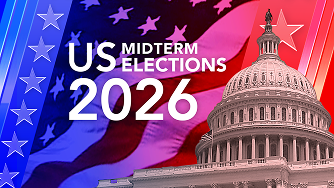
The November 2026 midterm elections represent another critical test for American democracy.
Although midterm elections do not determine the presidency, they can dramatically reshape the balance of power in Washington.
Control of Congress determines whether a president can advance legislation, defend policy priorities and maintain political momentum.
The current election environment has been particularly contentious.
The Trump administration’s efforts to influence election administration, obtain voter information and restrict mail voting have generated legal challenges and concern among election specialists.
The administration’s critics argue that these measures threaten electoral independence and could create opportunities to disrupt the certification of results.
Supporters maintain that election security and voter verification are legitimate governmental responsibilities.
The constitutional distinction is important: states retain the principal responsibility for administering elections, while Congress has specific powers to regulate federal electoral procedures. The president does not possess unlimited authority to control elections.
The outcome of the midterms will therefore matter not only politically but institutionally.
A Congress controlled by the opposition could intensify investigations, obstruct legislation and challenge the administration’s use of executive power.
A Republican victory could strengthen Trump’s political position and reinforce his legislative agenda.
Either outcome could deepen the confrontation between the executive branch and its political opponents.
Gerrymandering: The manipulation of political geography
One of the most persistent controversies in American elections is gerrymandering.
The practice involves drawing electoral districts in ways that advantage particular political parties or groups.
Although redistricting is a legitimate administrative process, partisan manipulation can produce electoral outcomes that do not accurately reflect the distribution of voter preferences.
Both Republican and Democratic politicians have participated in controversial redistricting efforts.
The consequences can be substantial.
A party may secure a disproportionate number of congressional seats despite receiving a smaller share of the statewide vote.
This creates a structural problem for representative democracy.
When voters believe that electoral boundaries have been designed to predetermine outcomes, confidence in the political system can deteriorate.
The controversy is particularly important because congressional control can influence national legislation, investigations and the balance of power between Washington and the states.
Campaign finance: Who really controls American politics?
American elections are also shaped by enormous financial resources.
Political campaigns require substantial funding for advertising, staff, data operations, legal services and voter mobilization.
The influence of wealthy donors, corporations, political action committees and organized interest groups has become a central issue in debates about democratic representation.
The Supreme Court’s 2010 Citizens United decision significantly changed the landscape of political spending by allowing corporations and unions to make independent political expenditures.
Supporters argue that political spending constitutes protected political expression.
Critics contend that the system gives wealthy individuals and powerful organizations disproportionate influence over public policy.
The controversy raises a fundamental question: can political equality survive when financial resources are distributed so unevenly?
Although campaign finance does not determine every election, it can influence which candidates gain visibility, which issues dominate public debate and whose interests receive sustained political attention.
Media, misinformation and the digital battlefield
The American electoral environment has been transformed by social media, online influencers, partisan news outlets and increasingly sophisticated information operations.
Political narratives can spread across millions of accounts before traditional news organizations have verified the underlying claims.
False information, manipulated videos, misleading headlines and fabricated allegations can influence public perceptions of candidates and institutions.
Artificial intelligence introduces additional risks.
Deepfake videos, synthetic audio and fabricated documents can create convincing political content that is difficult to distinguish from authentic material.
The danger is not limited to misinformation itself.
Repeated exposure to contradictory claims can produce a broader collapse in public confidence, leaving citizens unable to determine which institutions or sources deserve trust.
This creates an important distinction between political disagreement and information manipulation.
Democracy requires disagreement. It cannot function effectively when citizens lose the ability to establish basic facts.
For Verifyr, this is one of the most consequential developments in contemporary election intelligence.
The verification of political claims, electoral footage, campaign statements and digital evidence is increasingly important to understanding the real dynamics behind political events.
Immigration, identity and the changing American electorate
Immigration has become one of the defining political issues of the Trump era.
Trump’s supporters frequently view border security, immigration enforcement and national sovereignty as central questions of American identity.
His opponents argue that aggressive immigration policies can undermine humanitarian obligations, economic interests and constitutional protections.
The issue also intersects with electoral politics.
Trump has repeatedly claimed that illegal immigration threatens election integrity, including allegations that undocumented migrants are being brought into the country to influence elections.
However, noncitizens are generally prohibited from voting in federal elections, and documented cases of illegal noncitizen voting have been rare.
The distinction between immigration policy and electoral fraud is therefore important.
The United States faces legitimate debates about border security, citizenship and immigration reform. Those debates should not automatically be treated as evidence of electoral manipulation.
The broader political conflict reflects a changing electorate, demographic transformation and competing visions of what American national identity should represent.
The international consequences
The American electoral crisis has implications far beyond the United States.
Washington remains central to NATO, global financial markets, international security arrangements and the balance of power between major geopolitical actors.
Political instability in America can affect confidence in its alliances and strategic commitments.
Russia and China closely monitor American political divisions, particularly when they influence Washington’s ability to maintain a coherent foreign policy.
European governments must consider whether American security commitments will remain stable across administrations.
Middle Eastern allies face similar uncertainty regarding Washington’s military presence, regional diplomacy and economic partnerships.
The credibility of American democracy also influences its ability to promote democratic governance internationally.
When Washington criticizes electoral manipulation abroad, its arguments carry less persuasive force if domestic institutions appear vulnerable to political interference.
This does not mean American democracy has collapsed.
It means the political credibility of the United States is increasingly contested.
The deeper question: Is American democracy entering a new era?
The United States has survived major political crises before.
The Civil War, the Watergate scandal, the contested presidential election of 2000 and the civil rights struggles all tested the resilience of American institutions.
The current crisis is different in several respects.
Political polarization is increasingly reinforced by separate information ecosystems, declining institutional trust and the growing willingness of political leaders to challenge established democratic conventions.
The danger is not necessarily that American democracy will collapse overnight.
A more realistic concern is gradual institutional erosion.
When citizens lose confidence in elections, courts, media organizations and political institutions, democratic governance becomes increasingly difficult.
The country may continue holding elections while political legitimacy becomes progressively weaker.
This is why the current period deserves close attention.
The United States is not merely fighting over who should govern.
It is fighting over the rules, institutions and political assumptions that determine how power is transferred and exercised.
Verifyr Geopolitical Intelligence: What to watch
The most important indicators in the coming months will include:
- The outcome of the 2026 midterm elections and the balance of power in Congress. - Legal challenges involving voter eligibility, mail ballots and election administration. - Attempts to influence or delay electoral certification. - The independence and operational capacity of election security institutions. - The political response to electoral victories or defeats. - The spread of misinformation, manipulated media and allegations of electoral fraud. - The ability of American institutions to resolve political disputes without escalating constitutional confrontation.
These developments will help determine whether the United States can preserve confidence in its electoral system while navigating an increasingly polarized political environment.
Conclusion: The battle for America's political future
Donald Trump has fundamentally altered American politics.
His movement has challenged the traditional political establishment, mobilized millions of voters and exposed deep divisions within American society.
But the controversies surrounding his presidency and the wider electoral system reveal something more profound.
American democracy is facing a test of institutional resilience.
The challenge is not simply whether Republicans or Democrats win the next election.
It is whether the United States can preserve a political system in which electoral outcomes are accepted, institutions remain accountable and political power is transferred peacefully.
For a country whose global influence depends partly on its democratic credibility, the stakes are enormous.
The coming elections will not resolve every controversy.
But they will offer another indication of whether America’s political institutions can withstand the pressures of an increasingly polarized era.
The world is watching—not only to see who wins, but to understand what American democracy is becoming.
Signature
Alain Nzeyimana Founder & CEO | Verifyr Geopolitical Intelligence
Related intelligence
☭CPP Crypto Corruption: China’s Digital Financial Crackdown Enters a New Phase
☭CPP Crypto Corruption: China’s Digital Financial Crackdown Enters a New Phase
2 Nov 2026
France’s Unrest Deepens: Nearly 1,000 Arrested as Violence Returns to the Streets
France’s Unrest Deepens: Nearly 1,000 Arrested as Violence Returns to the Streets
25 Oct 2026
CENTCOM’s A-10 Patrol: Routine Flight or Strategic Signal?
CENTCOM’s A-10 Patrol: Routine Flight or Strategic Signal?
24 Oct 2026
Plans
Free
$0
Instant verdicts, no signup
Pro
$49
Full reports + certificates
Growth
$149
1,000 audits + team access
Newsroom report
$199
One analyst-reviewed certificate
Newsletter
Get verified stories in your inbox
One email when a new audit drops. No spam.