
Geopolitics
The CIA Chief Went to Moscow. The World Should Pay Attention.
By Alain Nzeyimana ·
The CIA Chief Went to Moscow. The World Should Pay Attention.
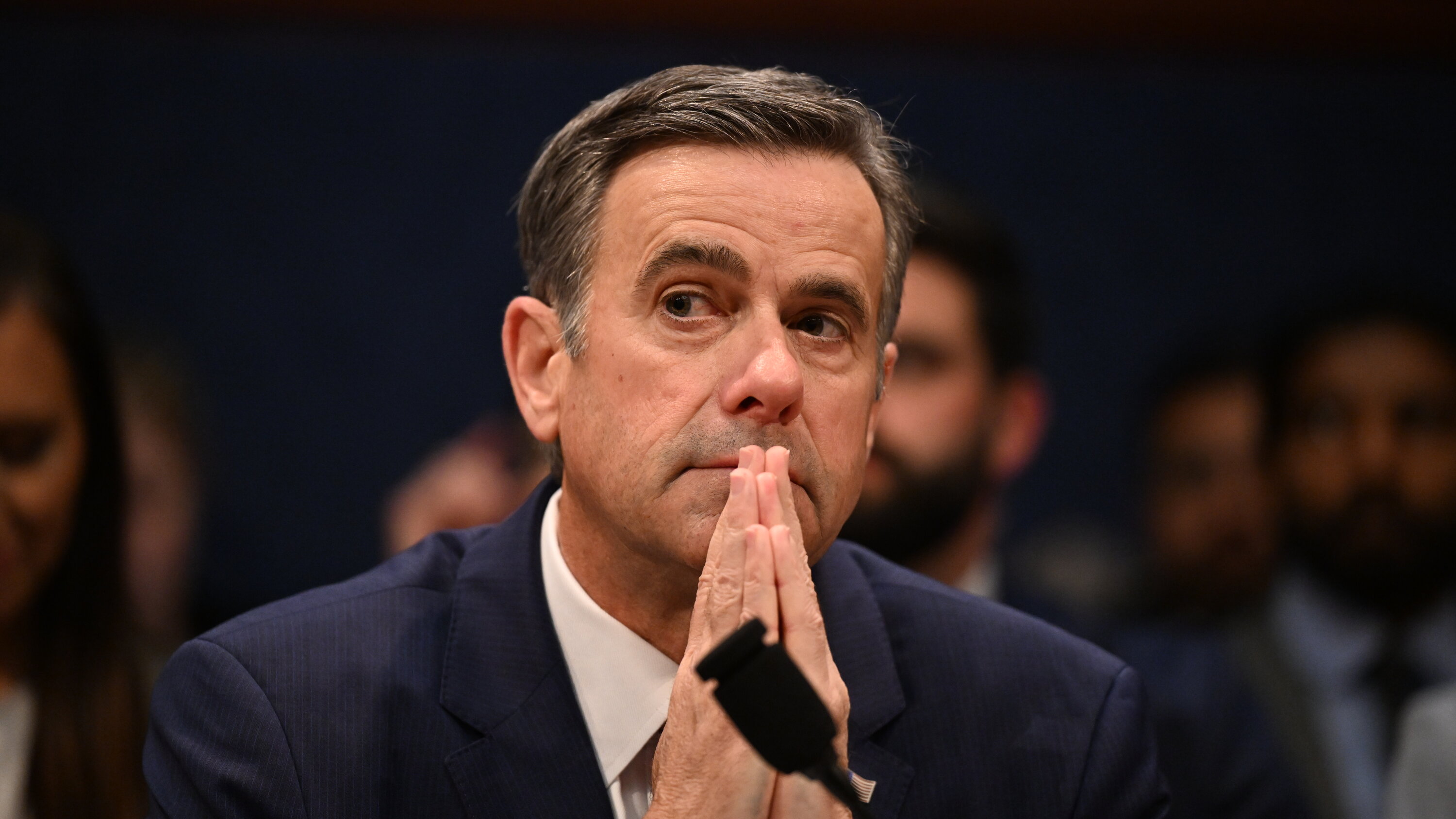
The CIA Chief Went to Moscow.
Get our raw articles before they are published anywhere else. Join the official Verifyr Telegram Channel t.me/VerifyrOfficiaThe World Should Pay Attention.
John Ratcliffe’s trip is now confirmed: Russia says the CIA director met Sergei Naryshkin, the head of the SVR, Russia’s foreign intelligence service. The meeting involved what Moscow called sensitive matters within the remit of their agencies.
What remains unofficial is the most consequential part. Multiple U.S. media reports say Ratcliffe went to Moscow to warn Russia against attacking NATO, amid U.S. intelligence concerns that Moscow could test the alliance through cyberattacks, hybrid operations or limited provocations rather than a full-scale conventional assault.
That distinction matters. The trip is fact. The NATO warning is strongly reported but has not been officially confirmed by Washington or Moscow.
Why send the CIA chief?
This is the key geopolitical question.
A foreign minister delivers diplomacy. A president delivers politics. A CIA director delivers a message when the intelligence itself is part of the message.
Ratcliffe did not meet Vladimir Putin directly, but the Kremlin says Putin was briefed afterwards. This is therefore a communication channel between two adversaries operating below the level of a presidential summit.
The message may have been deliberately direct:
Washington is watching. We understand what you may be considering. Do not miscalculate NATO.
But there is an uncomfortable historical parallel. The last publicly known CIA director to visit Moscow was William Burns in 2021. He warned Russia against invading Ukraine. Russia invaded anyway.
Why now?
The Ratcliffe trip sits at the intersection of several crises.
Ukraine: the war has not ended, despite repeated diplomatic efforts.
NATO: recent U.S. intelligence assessments reportedly suggest Russia could test the alliance through limited actions designed to probe whether Article 5 would actually be enforced. The Baltic states are particularly exposed to that strategic calculation.
Iran and the Middle East: Moscow remains Tehran’s major strategic partner, while the U.S. and its allies are simultaneously confronting Iran. Russia and the United States may therefore need intelligence-to-intelligence channels to prevent multiple conflicts from colliding.
Trump: President Trump has described the visit as “semi-routine” and denied the reported NATO link, while still saying that “something may come out” of the trip.
That creates an interesting contradiction: Washington appears to be warning Moscow while publicly downplaying the warning.
The deeper message
The world may be entering a dangerous phase in which the question is no longer simply:
Will Russia win or lose in Ukraine?
It may increasingly be:
What does Russia do if the war in Ukraine does not produce the outcome Moscow needs?
A direct attack on NATO would be extraordinarily risky. A limited cyberattack, sabotage campaign, drone incident, border provocation or hybrid operation would be different. Such actions could be designed not necessarily to start a world war, but to discover whether NATO's political unity is real.
That is why Ratcliffe's journey matters.
A CIA director crossing into Moscow is not necessarily evidence that war is imminent. But it is evidence that Washington considers direct communication with Russia important enough to use one of its most senior intelligence officials as the messenger.
The Verifyr conclusion
The immediate danger is not necessarily a Russian invasion of Europe tomorrow.
The greater danger is miscalculation.
Russia may believe the West is divided. Europe may believe Russia can be contained. Trump may believe direct communication can prevent escalation.
History repeatedly shows that major conflicts often begin when governments are most convinced they understand their adversary's limits.
The practical priority now is not more public threats. It is stronger deterrence, clearer NATO communication and reliable back channels between Washington and Moscow. In a world with Ukraine, Iran, the Middle East and nuclear powers all under pressure, preventing one misunderstanding may be as important as winning one confrontation.
By Alain Nzeyimana Founder & CEO | Verifyr
Related intelligence
Kimberly Guilfoyle: When Diplomacy Meets Geopolitical Rivalry
Kimberly Guilfoyle: When Diplomacy Meets Geopolitical Rivalry
13 Oct 2026
Brazil: The Global Power That Refuses to Choose a Side
Brazil: The Global Power That Refuses to Choose a Side
5 Oct 2026
Greenland, Russia, Britain and the Red Sea Signal a New Geopolitical Era
Greenland, Russia, Britain and the Red Sea Signal a New Geopolitical Era
18 Sept 2026
Plans
Free
$0
Instant verdicts, no signup
Pro
$49
Full reports + certificates
Growth
$149
1,000 audits + team access
Newsroom report
$199
One analyst-reviewed certificate
Newsletter
Get verified stories in your inbox
One email when a new audit drops. No spam.