
Geopolitics
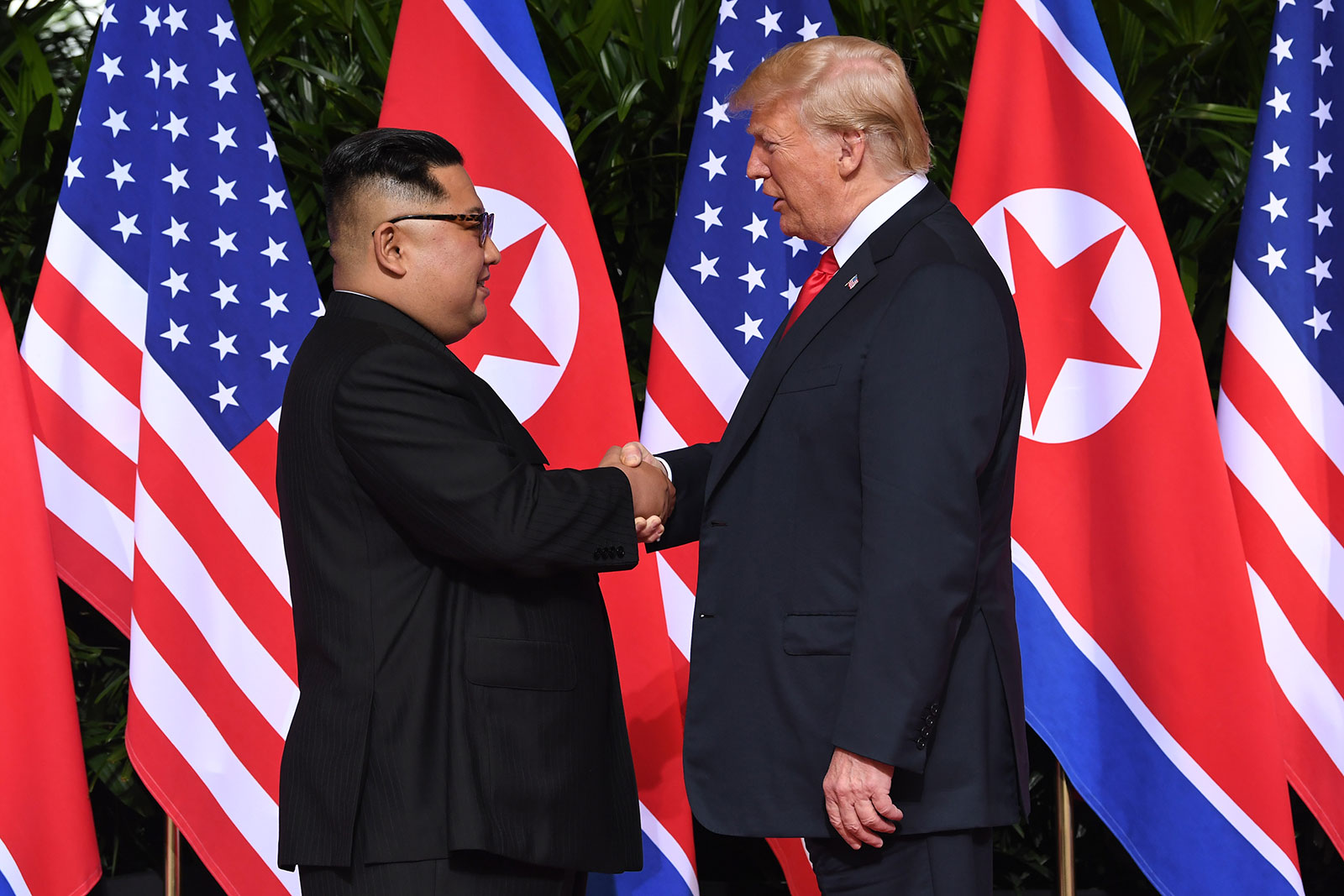
Trump, Kim and the Price of Reassurance
By Alain Nzeyimana ·
Trump, Kim and the Price of Reassurance
Trump, Kim and the Price of Reassurance
Get our raw articles before they are published anywhere else. Join the official Verifyr Telegram Channel t.me/VerifyrOfficiaWashington's decision to scale back military exercises with South Korea may be intended as a diplomatic opening to Pyongyang. But it also raises a much larger question: how far can a transactional approach to alliances go before deterrence itself becomes part of the negotiation?
The most important part of Donald Trump's latest move in Korea is not the size of the military exercise being reduced.
It is why he says he wants it reduced.
Trump has instructed Defense Secretary Pete Hegseth to substantially reduce U.S. participation in joint military exercises with South Korea, citing their cost, his relationship with North Korean leader Kim Jong Un and Seoul's refusal to support Washington's position on Iran.
That combination deserves closer scrutiny.
Because this is no longer simply about military exercises on the Korean Peninsula.
It is about the changing price of America's security guarantees.
The Kim factor
Trump has made no secret of the importance he places on his personal relationship with Kim Jong Un.
His latest intervention takes that relationship a step further: it is now being used as part of the justification for changing the military posture of the United States alongside one of its closest Asian allies.
Trump has argued that the exercises send an inappropriate and hostile signal to a North Korean regime he considers, at least under his current assessment, relatively unthreatening.
There is a strategic logic to this.
Military exercises can be deterrent signals. But they can also become obstacles to diplomacy if an adversary interprets them as preparation for conflict.
Trump appears to believe that reducing the signal could create space for engagement with Pyongyang.
South Korea, however, cannot simply view the exercises through the prism of Trump's relationship with Kim.
For Seoul, the fundamental problem remains the existence of a nuclear-armed neighbour with substantial conventional and asymmetric capabilities.
That is why the distinction between reassurance and deterrence matters.
The exercise is changing — because the threat is changing
The 2026 Ulchi Freedom Shield exercise was designed before Trump's latest intervention to run from August 17 to 27.
Approximately 18,000 South Korean troops are participating, with this year's training incorporating threats such as drones, GPS disruption, cyberattacks and electronic warfare.
This is significant.
These are not simply Cold War-style exercises rehearsing a conventional invasion scenario.
They are an attempt to adapt allied forces to a battlefield increasingly shaped by drones, electronic warfare, cyber operations and lessons emerging from conflicts elsewhere — particularly Ukraine.
That creates the first strategic dilemma for Washington.
If the military environment is becoming more technologically complex, reducing training may save money in the short term while potentially increasing the cost of an actual crisis later.
The U.S. military itself describes Freedom Shield as an exercise designed to validate combined readiness and improve coordination between American and South Korean forces.
So the question is not whether exercises are expensive.
They are.
The question is whether the capability they maintain is worth the cost.
And then there is Iran
This is arguably the more revealing element of Trump's decision.
Trump has linked his dissatisfaction with the exercises to South Korea's unwillingness to participate in U.S. efforts concerning Iran. Reuters reported that Trump said he had asked South Korean President Lee Jae Myung whether Seoul would participate in Washington's effort to "denuclearize Iran" and received a refusal.
If that linkage is deliberate, it tells us something about the administration's conception of alliances.
The traditional model is straightforward:
An ally is protected because the alliance itself has strategic value.
The transactional model is different:
An ally's value is increasingly measured by what it contributes to the broader strategic agenda.
That distinction matters.
South Korea's principal security concern is North Korea.
Washington's strategic agenda is considerably broader.
Iran, China, Russia, North Korea and the architecture of American power are increasingly connected in Washington's strategic thinking.
Seoul, however, does not necessarily share every American priority.
And that is where an alliance can become complicated.
The danger of transactional reassurance
There is nothing inherently irrational about transactional diplomacy.
States make deals. Allies negotiate. Governments expect reciprocity.
Trump's approach can therefore be understood as an attempt to extract greater strategic value from America's alliances rather than simply maintaining them indefinitely at American expense.
But there is a potential problem.
Security guarantees derive much of their power from predictability.
If an ally begins to believe that military reassurance can be reduced because it disagreed with Washington on an unrelated issue, the calculation changes.
The question becomes:
Which commitments are permanent, and which are conditional?
That question will not be asked only in Seoul.
Tokyo will notice.
European capitals will notice.
NATO members will notice.
Partners in the Middle East will notice.
And adversaries will notice.
This is why the Korean Peninsula is becoming an interesting laboratory for a much larger transformation in American foreign policy.
Seoul's response matters
There is also an immediate complication.
The exercises began as scheduled on August 17 despite Trump's announcement. South Korean officials have said the allies have closely coordinated on the exercise, meaning Trump's political instruction and the military programme now exist in an unusual state of tension.
That ambiguity itself is strategically important.
Washington is signalling one thing to Pyongyang.
The military alliance is simultaneously demonstrating another.
That creates a fascinating question:
Who ultimately determines the operational meaning of America's commitments — the political leadership, the military establishment or the alliance structure itself?
The answer will matter well beyond Korea.
What does Kim actually want?
There is another assumption worth challenging.
Reducing military exercises may be intended to encourage Kim Jong Un back toward negotiations.
But there is no guarantee that concessions produce reciprocal concessions.
North Korea has historically viewed U.S.–South Korean military exercises as justification for strengthening its military posture. It has again condemned the current exercises and threatened a response.
Trump may therefore be calculating that personal diplomacy can succeed where military signalling has failed.
That is not an unreasonable proposition.
But it is a gamble.
If Kim responds positively, Trump can argue that reducing military pressure created diplomatic space.
If Kim does not respond, Washington will have reduced part of its deterrent signalling without necessarily receiving anything in return.
That is the strategic risk.
The bigger question: what is an alliance worth?
This is where the Korean story becomes bigger than Korea.
For decades, the U.S. alliance system has operated on a relatively simple proposition: American military power provides security, while allies contribute territory, forces, intelligence, political support and economic strength.
Trump is challenging the assumption that this bargain should remain static.
That challenge may ultimately prove necessary.
Alliances do have costs. Partners do have obligations. And American taxpayers have legitimate interests in how U.S. military resources are deployed.
But deterrence is also an asset.
It cannot necessarily be switched on and off like a commercial contract.
Once an adversary begins to believe that political disagreements can weaken an alliance's military posture, deterrence itself becomes less predictable.
And unpredictability can be dangerous.
The Verifyr assessment
Trump may be pursuing a coherent strategy:
reduce unnecessary provocation, lower costs, preserve a personal channel to Kim and demand greater strategic reciprocity from allies.
There is logic in that.
But the risk is equally clear.
A transactional alliance can become a conditional alliance.
And conditional security guarantees create uncertainty precisely where deterrence depends upon certainty.
The Korean Peninsula therefore offers an early test of a much larger question facing the international system:
> Can America make its alliances more transactional without making them less credible?
That is the question to watch.
Because if Trump's Korea strategy succeeds, it could become a model for a broader redefinition of American alliances.
And if it fails, the lesson may be equally consequential:
sometimes the price of reassurance is not measured in dollars. It is measured in credibility.
By Alain Nzeyimana Founder & CEO | Verifyr
Related intelligence
Kimberly Guilfoyle: When Diplomacy Meets Geopolitical Rivalry
Kimberly Guilfoyle: When Diplomacy Meets Geopolitical Rivalry
13 Oct 2026
Brazil: The Global Power That Refuses to Choose a Side
Brazil: The Global Power That Refuses to Choose a Side
5 Oct 2026
Greenland, Russia, Britain and the Red Sea Signal a New Geopolitical Era
Greenland, Russia, Britain and the Red Sea Signal a New Geopolitical Era
18 Sept 2026
Plans
Free
$0
Instant verdicts, no signup
Pro
$49
Full reports + certificates
Growth
$149
1,000 audits + team access
Newsroom report
$199
One analyst-reviewed certificate
Newsletter
Get verified stories in your inbox
One email when a new audit drops. No spam.