
Geopolitics
Jaylen Brown and the Battle Beyond Basketball
By Alain Nzeyimana ·
Jaylen Brown and the Battle Beyond Basketball
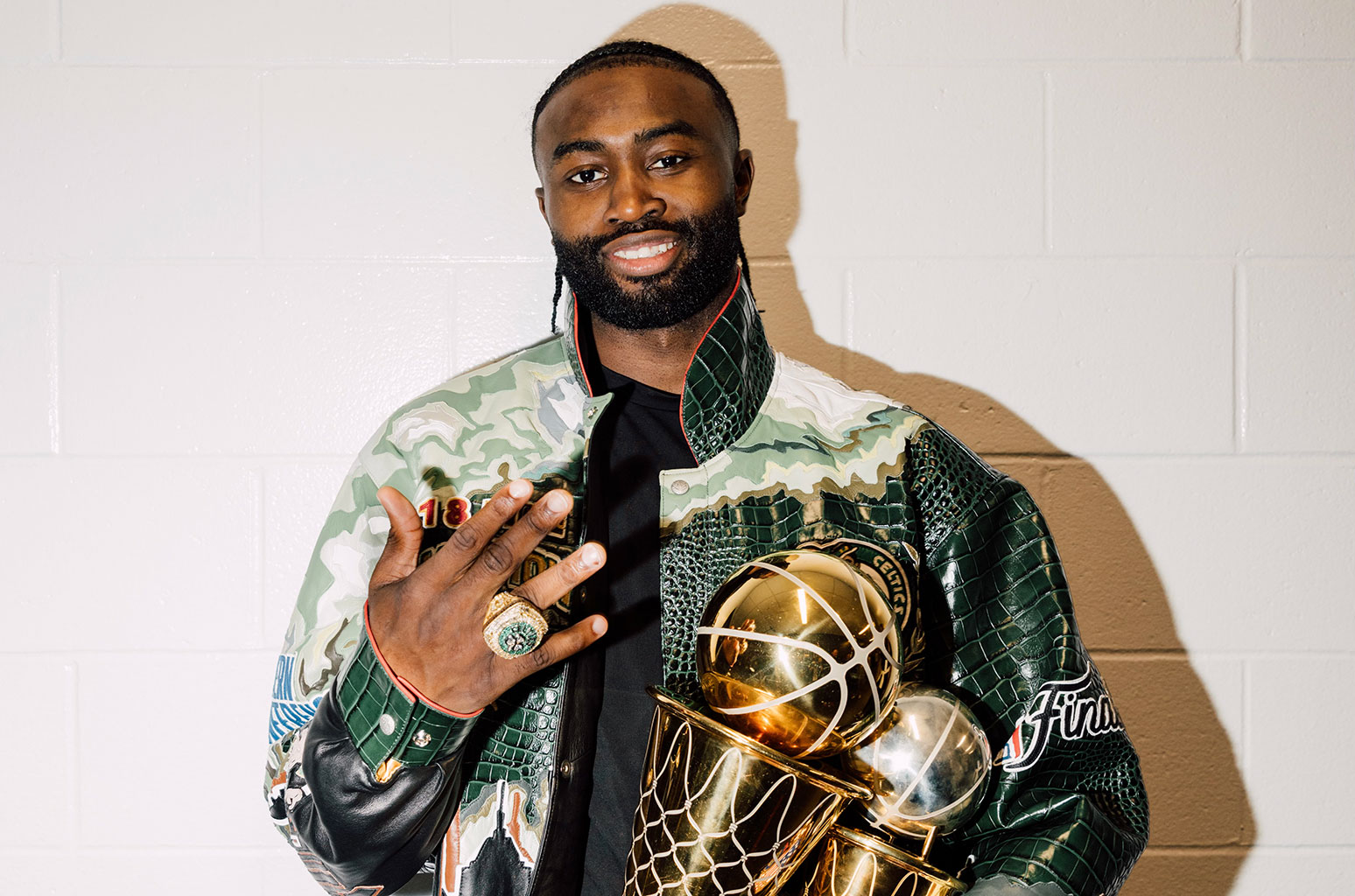
When Athletes Become Economic Power Centers: Jaylen Brown and the Battle Beyond Basketball
Get our raw articles before they are published anywhere else. Join the official Verifyr Telegram Channel t.me/VerifyrOfficiaBy Alain Nzeyimana Founder & CEO | Verifyr
Jaylen Brown is talking about something much bigger than basketball.
The Boston Celtics star has increasingly used his platform to question the structures surrounding professional athletes — particularly the influence of agents, managers, media institutions and the broader machinery that determines how athletes are perceived.
His argument is provocative: when athletes begin thinking beyond contracts and endorsements — when they start building businesses, investing in their communities and creating institutions of their own — they can encounter resistance.
That deserves examination.
The athlete is an asset. But who controls the asset?
Professional sport has always been an enormous commercial ecosystem.
An elite athlete generates value for leagues, franchises, broadcasters, sponsors, agents, media companies and advertisers. The player's performance may be the foundation of that ecosystem, but the economic infrastructure surrounding the player is controlled by many other actors.
This creates an interesting tension.
An athlete can earn hundreds of millions of dollars and still have relatively little influence over the systems that profit from their visibility.
Brown's broader concern is what happens when players begin challenging that arrangement.
What if athletes stop viewing wealth simply as personal consumption and start viewing it as capital?
Capital can buy businesses.
Capital can finance property.
Capital can create scholarships.
Capital can fund technology companies.
Capital can support local entrepreneurs.
Capital can create media platforms.
And, eventually, capital can create institutions that don't depend on the traditional gatekeepers.
That is where the conversation becomes much more interesting.
The idea of a modern Black Wall Street
The phrase "Black Wall Street" carries enormous historical weight.
The original Black Wall Street in Tulsa demonstrated what can happen when a concentrated Black community develops businesses, property ownership, financial institutions and commercial networks.
Its destruction in 1921 remains one of the starkest examples of how economic advancement can become entangled with racial violence and political power.
Brown's modern argument is different, but the underlying principle is familiar:
economic independence creates negotiating power.
Imagine professional athletes pooling a fraction of their wealth into investment funds specifically designed to develop businesses, housing, technology and institutions in underserved communities.
The objective wouldn't simply be charity.
It would be ownership.
Instead of repeatedly donating money to communities, athletes could help create assets that remain inside those communities.
That distinction matters.
Charity distributes wealth.
Ownership can reproduce it.
Why media becomes part of the equation
This is also where Brown's criticism of sports media becomes significant.
Sports media doesn't merely report what happens on the court. It helps construct the public identity of athletes.
A player can be portrayed as intelligent, rebellious, selfish, inspirational, difficult, political, loyal or controversial depending on the narrative surrounding him.
That doesn't mean every critical story is coordinated or illegitimate.
It does mean that narratives have economic consequences.
A negative media cycle can affect endorsements, public perception and an athlete's relationship with fans and organizations.
Brown has specifically criticized media personalities and what he sees as predetermined narratives.
Whether every example he cites is justified is a separate question.
The bigger question is this:
Who gets to define an athlete once that athlete starts defining himself?
The uncomfortable transition from celebrity to institution
There is a fundamental difference between being famous and having independent power.
A celebrity has attention.
An institution has infrastructure.
A celebrity can influence millions of people.
An institution can employ people, own property, finance companies, produce information and shape policy.
That is why athlete entrepreneurship matters.
The most consequential evolution of professional athletes may not be their salaries.
It may be their transition from employees and entertainers into owners, investors and institution-builders.
We've already seen athletes increasingly enter venture capital, media, technology, real estate and other industries.
The next stage could be collective.
Players don't necessarily have to build everything individually.
They can build together.
And collective capital creates something individual celebrity cannot:
scale.
But there is another side to Brown's argument
There is an important distinction between legitimate criticism and assuming every disagreement represents an organized attempt to suppress an athlete.
Media criticism is not automatically a coordinated attack.
Agents and advisers can have legitimate reasons for discouraging particular investments.
Businesses can fail.
Athlete-led ventures can be poorly managed.
And not every controversial athlete is necessarily a victim of a system.
That is precisely why Brown's claims should be examined rather than simply accepted.
The important issue isn't whether every accusation is correct.
It is whether the underlying structural question is real.
And that question is difficult to dismiss:
What happens when athletes accumulate enough capital, knowledge and networks to become economically independent of the institutions that made them famous?
The bigger story
Basketball is merely the stage.
The underlying story is about wealth and power.
For decades, athletes were largely encouraged to perform, earn, spend and endorse.
The emerging model is different.
Perform.
Earn.
Invest.
Own.
Build.
And eventually, create institutions that outlive the playing career.
If that transformation accelerates, professional sports could become something more than an entertainment industry.
It could become an engine for a new generation of minority entrepreneurship and community ownership.
That would create new opportunities.
It would also create new conflicts.
Because whenever ownership changes hands, power changes hands with it.
And perhaps that is the real story behind Jaylen Brown's comments.
Not basketball.
Power.
Related intelligence
Kimberly Guilfoyle: When Diplomacy Meets Geopolitical Rivalry
Kimberly Guilfoyle: When Diplomacy Meets Geopolitical Rivalry
13 Oct 2026
Brazil: The Global Power That Refuses to Choose a Side
Brazil: The Global Power That Refuses to Choose a Side
5 Oct 2026
Greenland, Russia, Britain and the Red Sea Signal a New Geopolitical Era
Greenland, Russia, Britain and the Red Sea Signal a New Geopolitical Era
18 Sept 2026
Plans
Free
$0
Instant verdicts, no signup
Pro
$49
Full reports + certificates
Growth
$149
1,000 audits + team access
Newsroom report
$199
One analyst-reviewed certificate
Newsletter
Get verified stories in your inbox
One email when a new audit drops. No spam.